







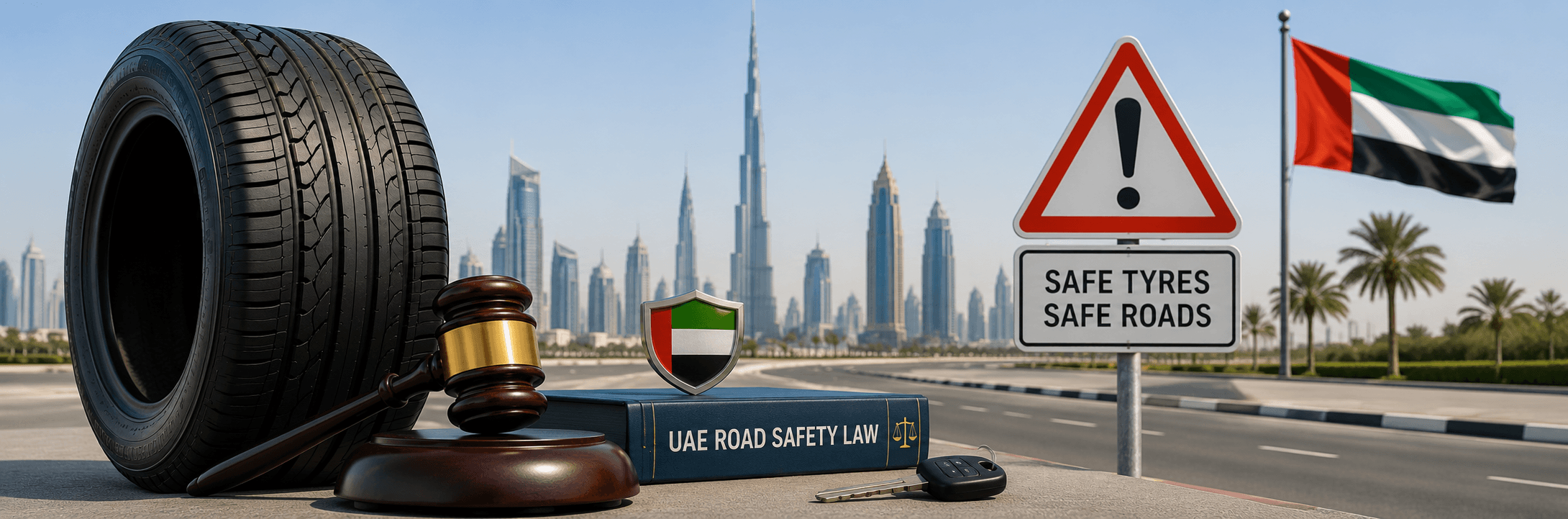
Tyres should meet the rules of tyre safety in the UAE if you want to drive without being caught and not be unprotected. In 2026, drivers will need to be careful about the age of tyres, the depth, condition, and load rating of treads, and the overall roadworthiness due to their influence on vehicle checks, renewal of registration, and safety on the road. Knowledge of the current UAE tyre laws can help drivers avoid fines and minimize tire-related accidents.
The only components of a vehicle that are in perpetual contact with the road are the tires, thus making them one of the most significant parts of the vehicle in terms of safety. Driving in the city every day or traveling between emirates every day, breaking UAE traffic rules, and keeping the car tyres in the UAE in good condition enhance the vehicle's braking performance, handling, and stability.
Keeping up with the existing rules, in turn, prepares one for the annual check-up and servicing of their vehicles. The UAE does not allow vehicles to be on public roads in poor technical condition.
What Are the Current UAE Tyre Laws Every Driver Should Know?
There are several tyre laws that directly affect vehicle owners in the UAE. These regulations are meant to enhance road safety and to make sure that all vehicles are running on tyres that meet the minimum safety standards.
- DOT code is the identification code stamped on every tyre that includes its manufacturing date.
- Tread depth refers to the depth of the grooves that provide grip and help disperse water from the tyre surface.
- Load index indicates the maximum weight a tyre can safely carry.
- Speed rating specifies the maximum speed a tyre is designed to sustain under recommended operating conditions
How Old Can Your Tyres Be Under UAE Law?
One of the most important UAE tyre regulations is the five-year rule. The maximum age of tires on vehicles should not exceed five years from the date of manufacture, regardless of how much tread remains.
To identify the manufacturing date, drivers can check the last four digits on the DOT code on the tyre sidewall. For example, code 2423 indicates that the tyre was produced in the 24th week of 2023. Tyres older than the permitted age may fail vehicle inspection even if they appear visually acceptable.
What Is the Minimum Legal Tread Depth in the UAE?
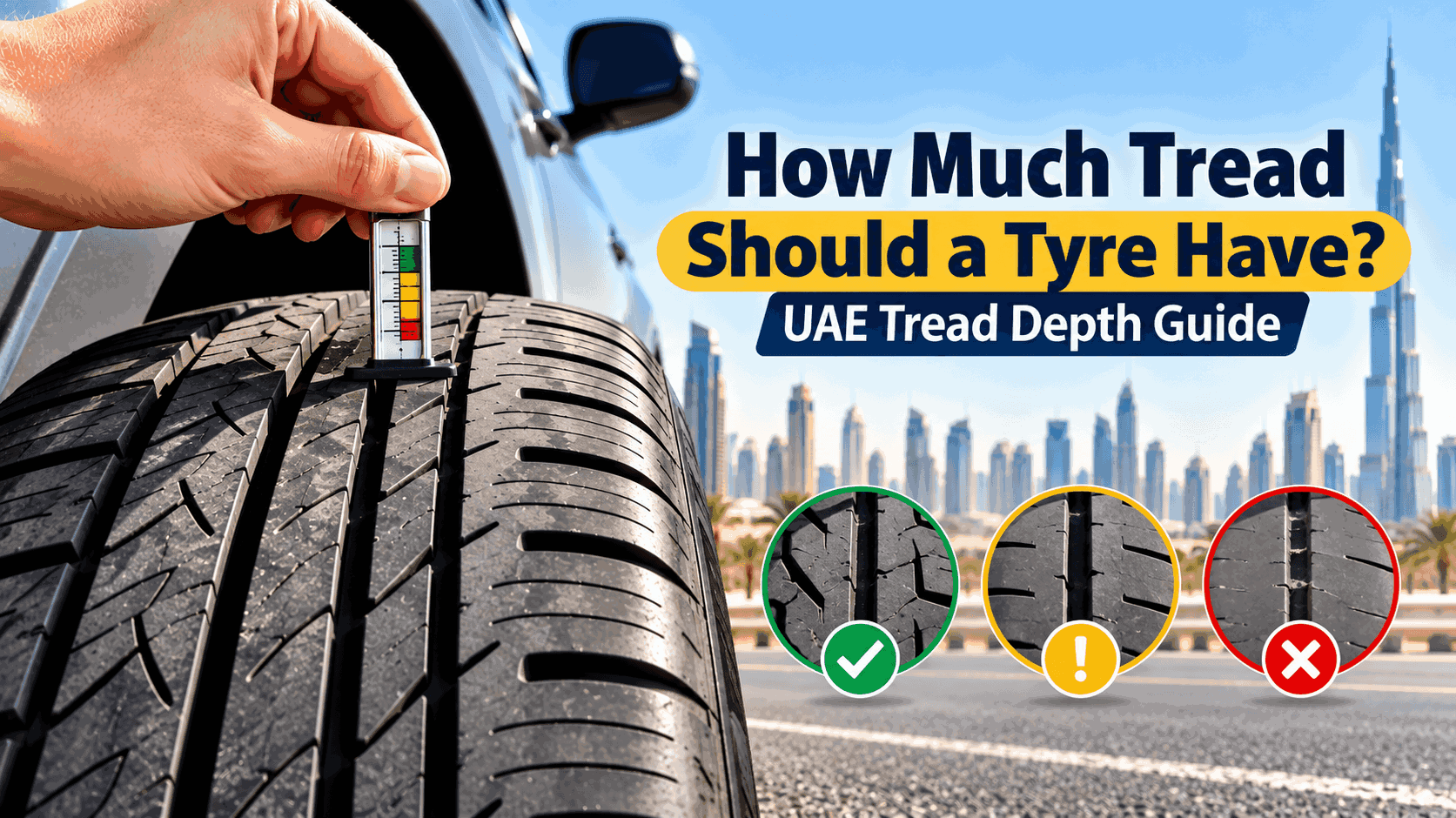
The legal minimum tread depth for passenger vehicle tyres in the UAE is 1.6 mm. Once tread wears below this limit, the tyre loses a significant amount of grip, particularly during emergency braking or wet road conditions.
Why Does Tread Depth Matter?
Adequate tread depth helps maintain traction, improves braking efficiency, and reduces the likelihood of skidding. Even though rainfall is limited in the UAE, proper tread depth remains essential for overall vehicle control and highway safety. Vehicle inspection centres check tread depth as part of the roadworthiness inspection process.
Which Tyre Damage Makes Your Vehicle Unsafe?
Not every tyre problem is related to tread wear. Structural damage can compromise safety even when the tyre still has sufficient tread remaining.
Drivers should replace tyres immediately if they notice:
- Sidewall bulges
- Deep cuts
- Exposed cords
- Large cracks
- Separation of tread
- Severe uneven wear
These conditions increase the likelihood of tyre failure, particularly during long-distance highway driving in high temperatures.
Can You Use Any Tyres on Your Car?
No. Each vehicle manufacturer defines approved tyre sizes, load indices and speed ratings that suit its design and performance needs.
The use of inappropriate tyres to fit a car should have an impact on the braking and handling, as well as the suspension performance, fuel economy and vehicle stability. The tyres should always be of a higher quality than the minimum requirements of the manufacturer.
What Happens If Your Tyres Do Not Meet UAE Safety Regulations?
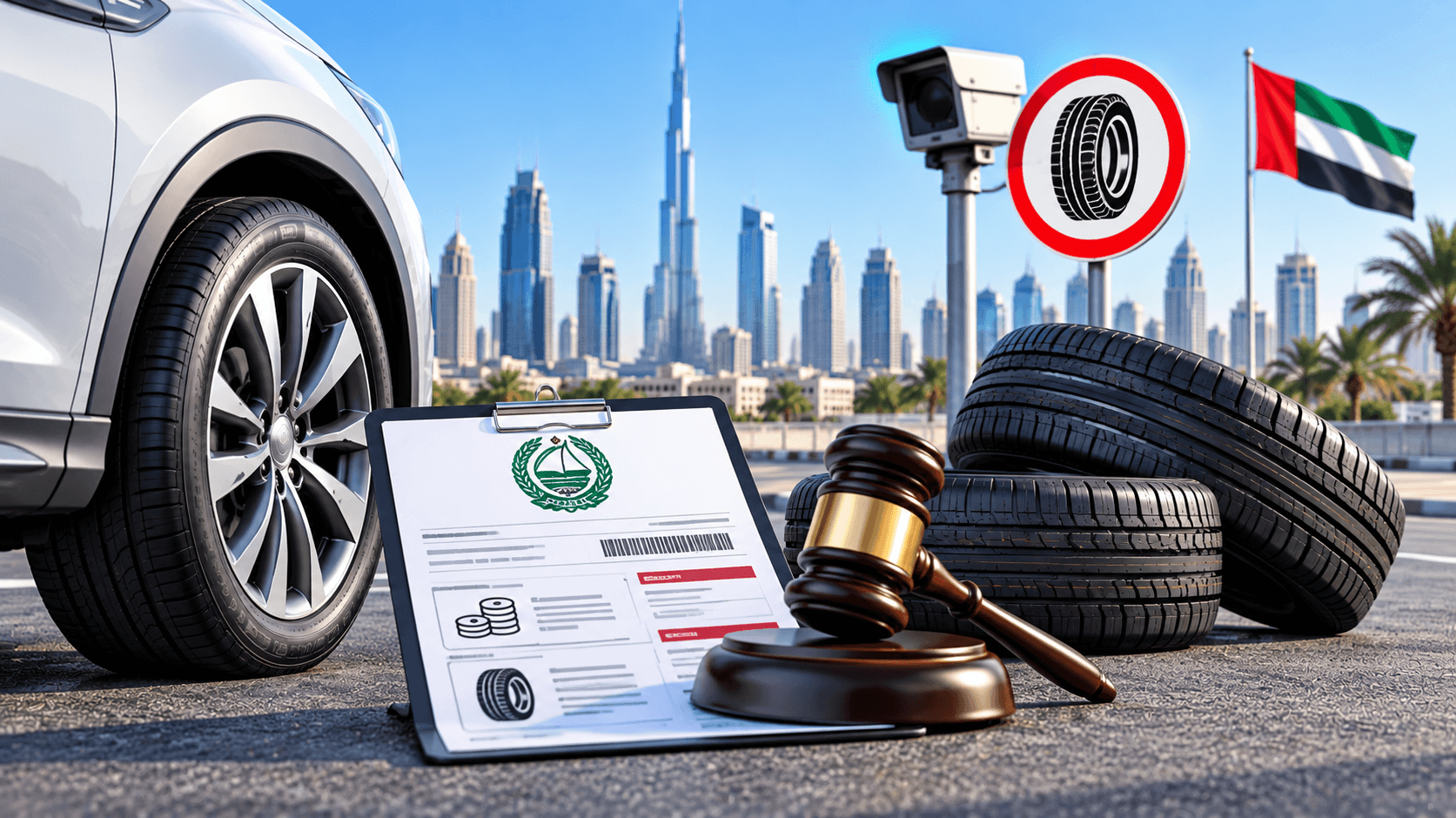
The failure to use tyres that comply with the legal safety standards in driving may result in severe outcomes in addition to the diminished performance of the vehicle. Cars with expired, damaged, or unsafe tyres will fail annual inspection and cannot renew their registration until they have the tyres changed.
Motorists can also be issued UAE traffic fines and black points, or have their vehicles impounded for violating traffic regulations when defective tires create unsafe driving conditions. Adherence to the tyre safety requirements in the UAE also minimizes legal as well as safety risks.
How Can You Check Whether Your Tyres Are Road Legal?
People ought to check their tyres and not wait until an annual check-up on the car. Problems in the pipeline can be detected by a few simple checks before they become a safety issue.
- Check the manufacturing date : Find the DOT code on the tyre sidewall and ensure the tyre is not more than five years old and the manufacture date of the tyre.
- Measure Tread Depth : Check the tread depth with a tread depth gauge or ensure that the remainder tread material is checked by an expert to ascertain that the remaining tread material does not fall below the legal minimum specification.
- Inspect for Visible Damage :Check cuts, bulges, cracks, open steel cords, embedded objects, or disproportionate tread wear that might warn of issues with the structure that need immediate action.
- Verify Tyre Pressure : Keeping the tyre to its recommended pressure by the manufacturer, this enhances handling, braking, fuel efficiency, and overall life span of the tyre.
How Do UAE Weather Conditions Affect Tyre Safety?
Auto tires are under constant pressure due to high road temperatures, long highway journeys, and daily car commuting in the UAE. High temperatures hasten rubber ageing, raise operating temperatures, and may lead to quicker tyre wear unless inflation pressure and alignment is kept within proper limits.
Drivers are advised to check their tyres UAE more often in summer since they might reveal the tyre weak points due to the high temperatures earlier than in cooler seasons.
What Maintenance Helps You Stay Compliant with UAE Tyre Laws?
Following a regular maintenance schedule not only improves vehicle safety but also helps ensure compliance with UAE tyre regulations throughout the year.
Recommended maintenance includes:
- Checking tyre pressure every month
- Rotating tyres every 8,000–10,000 km
- Scheduling wheel alignment when uneven wear appears
- Balancing wheels after tyre replacement
- Inspecting tyres before long-distance travel
- Replacing tyres before they exceed the legal age limit
Conclusion
Every driver in the year 2026 in the UAE is supposed to understand UAE tyre regulations. Adhering to regulations on tire age, tread depth, condition, load rating, and specifications enhances road safety and helps drivers avoid inspection failures and potential fines. Periodic tire check-ups and maintenance also help eliminate the risk of sudden tire bursts, especially in the demanding weather conditions of the UAE.
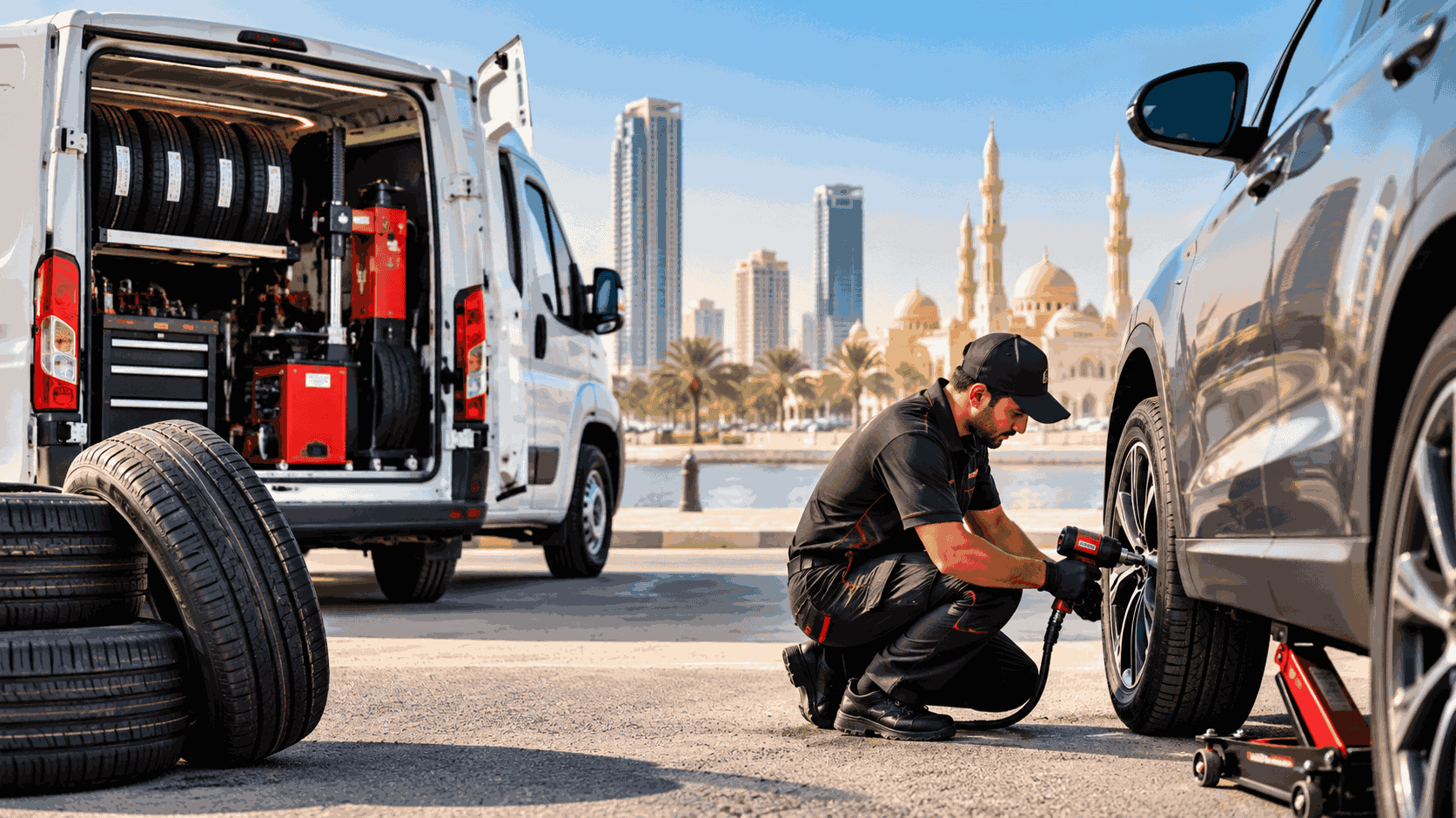
If you’re looking for premium tyres UAE, reliable tyres for car, or expert guidance on selecting safe and compliant car tyres UAE, TyresCart offers a wide range of genuine tyre brands, professional tyre fitting, wheel balancing, alignment, and inspection services. Whether you’re replacing worn tyres or preparing your vehicle for inspection, TyresCart helps drivers stay compliant with tyre safety UAE standards while enjoying safe, reliable performance on every journey.