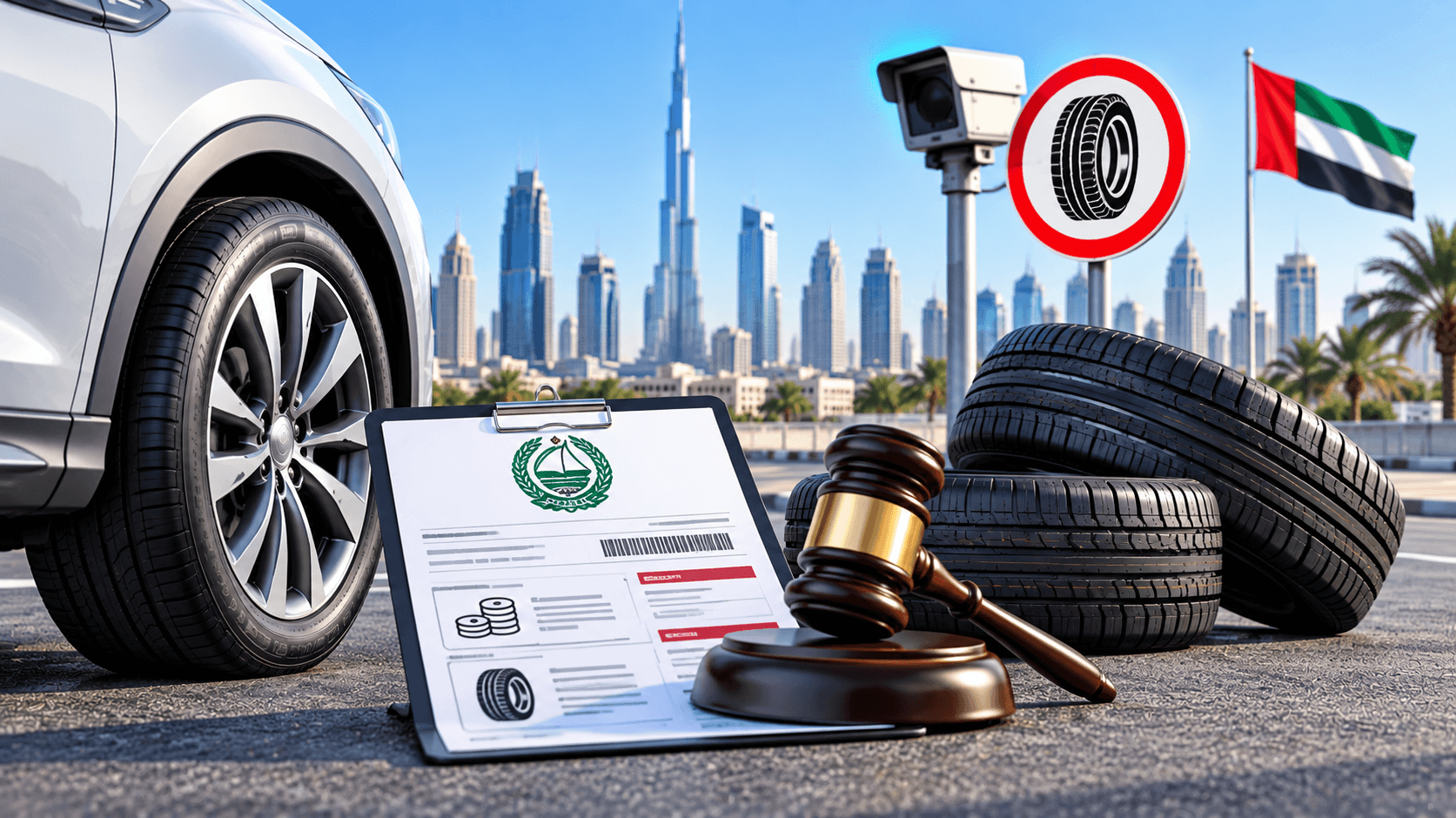

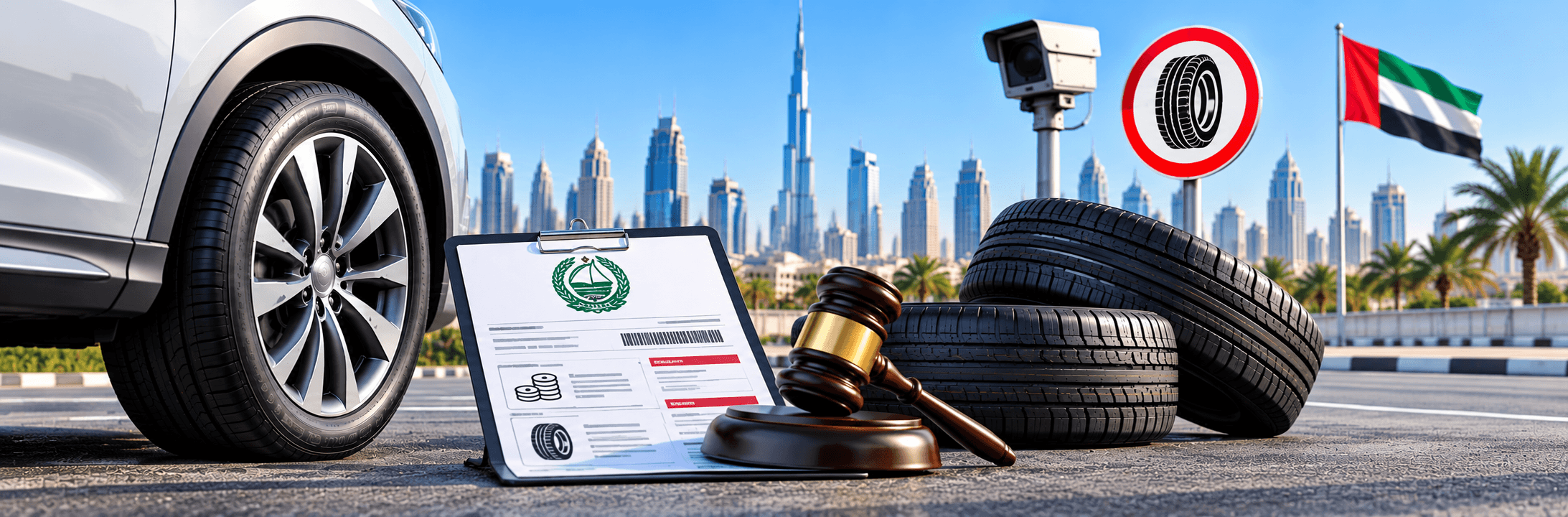
Driving with unfit tyres can result in an AED 500 fine, four black points and seven days of vehicle impoundment. Abu Dhabi Police reiterated this penalty in 2025 under Article 82 for driving a vehicle with tyres that are unfit for use.
Tyre checks should therefore go beyond simply looking for a flat tyre. Check tread condition, cracking, cuts, bulges, tyre size, load and speed ratings, inflation pressure and manufacturing age, especially before long journeys and during the hotter months. Abu Dhabi Police specifically advises drivers to check tyre condition, size, temperature rating, load capacity and year of manufacture.
What Is the Fine for Driving With Unfit Tyres in the UAE?
The fine for driving a vehicle with non-fit-to-use tyres is:
| Violation | Fine | Black Points | Impoundment |
|---|---|---|---|
| Driving with unfit tyres | AED 500 | 4 | 7 days |
Abu Dhabi Police reaffirmed the AED 500 fine, four black points and one-week vehicle impoundment in its 2025 summer tyre-safety campaign.
The key point is that “unfit tyres” covers more than tread wear alone. Physical damage, incorrect specification and insufficient load or speed capability can also make a tyre unsuitable.
What Can Make a Car Tyre Unfit for UAE Roads?
Several reasons can make a tyre unsuitable for driving. Abu Dhabi Police recommends that drivers check for damage and cracking and ensure tyres meet the right specifications for size, temperature, load, and year of manufacture.
- Excessive Tread Wear
Dubai RTA’s current technical inspection parameters list 1.5 mm as the minimum tread depth for light vehicles. Michelin Middle East, by comparison, uses 1.6 mm as its tread-wear replacement threshold, so do not treat those figures as interchangeable. If the tread has reached the tyre manufacturer’s wear indicators, replace the tyre according to the manufacturer’s guidance.
Inspect not just one section. Uneven wear can leave an inner or outer edge excessively worn even when the centre of the tread still appears serviceable.
- Cracks, Cuts and Bulges
A tyre is not automatically safe simply because it still has sufficient tread. Deep cuts, cracking, sidewall bulges, deformation or exposed internal material can indicate structural damage and should be professionally assessed.
Dubai RTA’s inspection parameters specifically identify deep cuts, bulges and exposed cords as tyre defects. A sidewall bulge is particularly concerning because it can indicate internal structural damage beneath the rubber.
- Incorrect Tyre Specification
Tyres must meet the vehicle’s required size, load index and speed rating. Abu Dhabi Police also encourages drivers to maintain proper tyre specifications and ensure they suit long-distance travel.
Can You Be Fined Even If Your Tyres Still Have Tread?
Potentially, yes. The remaining tread is only one part of tyre condition. For example, a tyre can still have substantial tread but develop a sidewall bulge after a kerb impact. Judging that tyre by tread depth alone could overlook a serious structural defect.
The same applies to significant cuts, deformation, and other visible damage. That is why UAE motorists should inspect the entire tyre, including the sidewalls and tread surface.
How Do You Check the Manufacturing Date of Your Tyres?
Find the four-digit manufacturing date code on the tyre sidewall. For example: 2426 = Week 24 of 2026 The first two digits show the production week and the final two show the year. Abu Dhabi Police advises motorists to check the year of manufacture alongside tyre condition, size, temperature rating and load capacity.
Abu Dhabi Police’s tyre-safety guidance also states that a tyre’s production date should not exceed five years for continued serviceability.
Why Is Tyre Inspection Particularly Important During UAE Summer?
High summer temperatures make tyre condition and inflation particularly important, especially during long-distance or sustained motorway driving. Abu Dhabi Police specifically warns drivers to check for damaged or cracked tyres during summer because high temperatures can increase the risk of serious tyre-related incidents.
Incorrect inflation can also increase tyre stress. Underinflation increases tyre flexing and heat build-up during driving. Check tyre pressure when the car tyres are cold and use the pressure recommended by the vehicle manufacturer, usually shown on the tyre-pressure placard or in the owner’s manual. Do not use the tyre sidewall’s maximum-pressure figure as the normal inflation target.
What Should You Check Before a UAE Tyre Inspection?
You don't need to wait for an official inspection to check your tyres. Take a few minutes and look at:
- Tread depth across the tyre
- Inner and outer tread edges
- Cuts or cracking
- Sidewall bulges
- Uneven wear
- Correct inflation pressure
- Manufacturing date
- Correct tyre size
- Load and speed ratings
If anything looks abnormal, have the tyre professionally inspected rather than waiting for the next vehicle test.
Can Uneven Tyre Wear Cause Inspection Problems?
Severe uneven wear can leave one section of the tread excessively worn while another still appears acceptable.
Common causes include improper wheel alignment, tyre pressure issues, and damaged suspension parts.
For example, if the inner shoulder is heavily worn, looking only at the visible outer tread can give a misleading impression of the tyre’s condition.
If uneven wear keeps returning, replacing the tyres without correcting the underlying cause can result in the new set developing the same pattern.
Have the alignment and suspension condition checked where appropriate.
What Should You Do If Your Tyres Are Close to the Limit?
Do not wait until a tyre is clearly unfit or due to fail inspection before planning replacement. If tread depth is approaching the applicable limit, the tyre is damaged or its specification is no longer suitable, have it inspected and replaced as necessary.
Drivers buying tyres in Sharjah or Ajman should follow the same process: confirm the vehicle specification first, then choose the correct size, load index and speed rating. A low price will not help if the replacement tyre doesn't fit your vehicle.
How Can You Reduce the Risk of Tyre Fines?
- Routine maintenance is the best strategy, rather than preparing only when the vehicle is due for inspection.
- Periodically check tyre pressure, inspect the tread and sidewalls, and watch for abnormal vibration or a loss of pressure. Also inspect for abnormal wear.
- Note the date of manufacture and schedule a professional inspection if you are unsure of the tyres' condition.
Regular tyre checks can reduce the risk of premature tyre failure and help drivers avoid the AED 500 fine, four black points and seven-day vehicle impoundment associated with driving on unfit tyres.
Conclusion
If your tyres are worn, cracked, bulging, damaged or no longer meet the vehicle’s required specification, replace them before they create a safety issue or fail inspection.
TyresCart allows UAE drivers to search for tyres by vehicle or tyre size and arrange professional fitting through its installer network. Its current fully fitted tyre prices include 5% VAT, delivery to the installer, fitting with a new standard rubber valve, wheel balancing and disposal of old tyres. Customers buying four tyres or more also receive a visual wheel-alignment check, with adjustment available at extra cost if needed.
If an inspection shows that your tyres need replacement, confirm the correct size, load index and speed rating first, then compare compatible options and total fitted cost rather than waiting for enforcement or the next vehicle test.