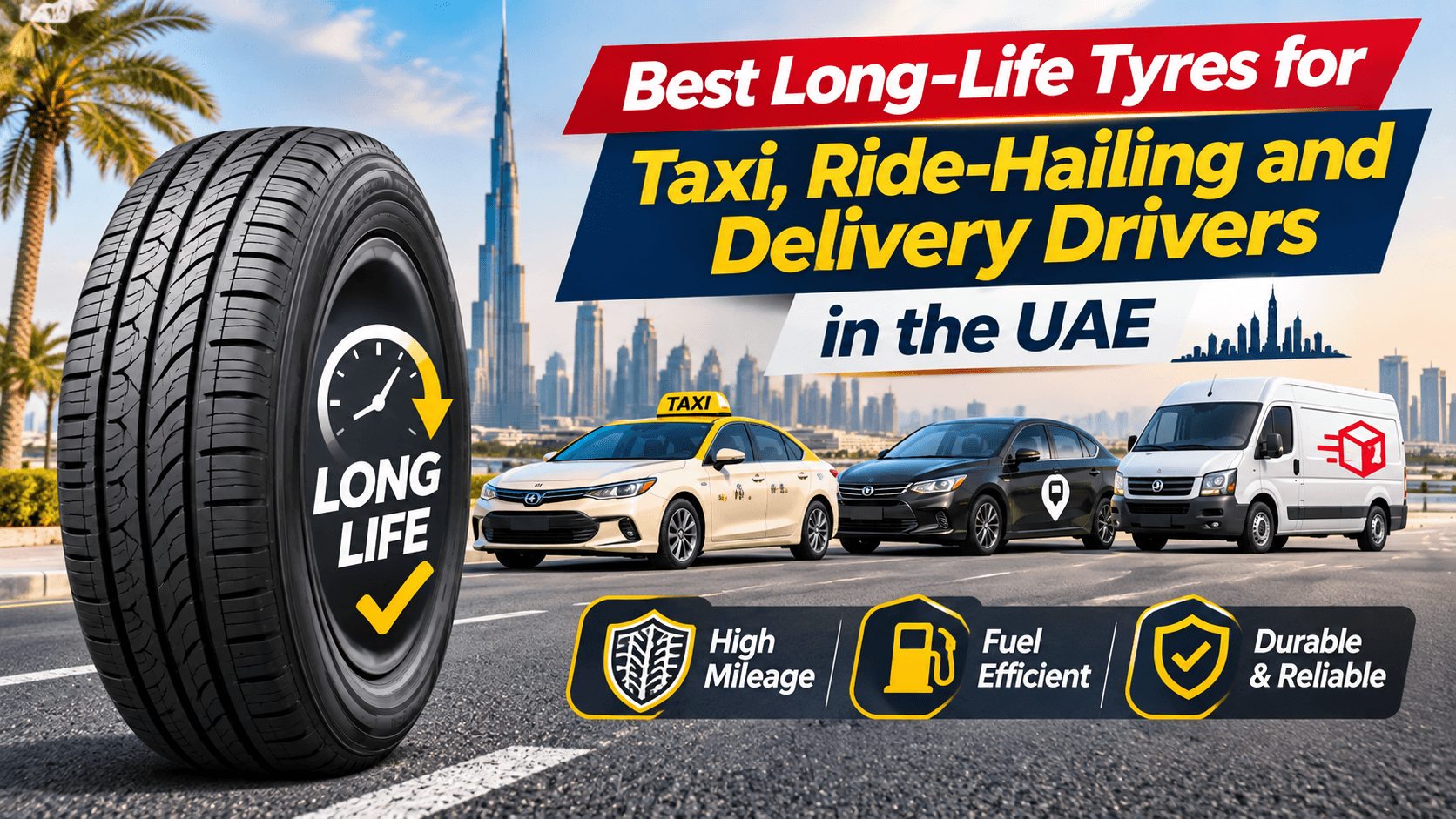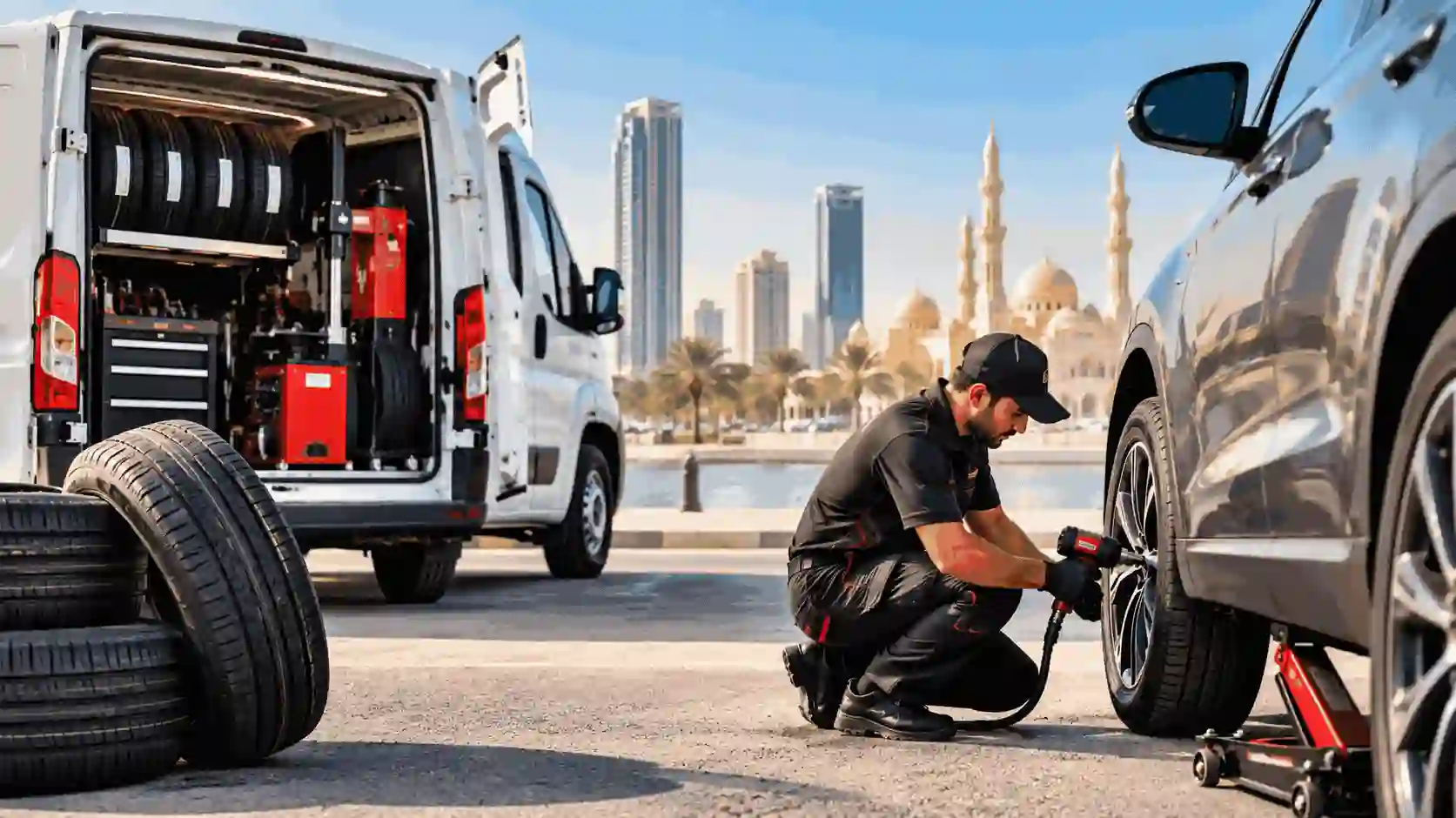








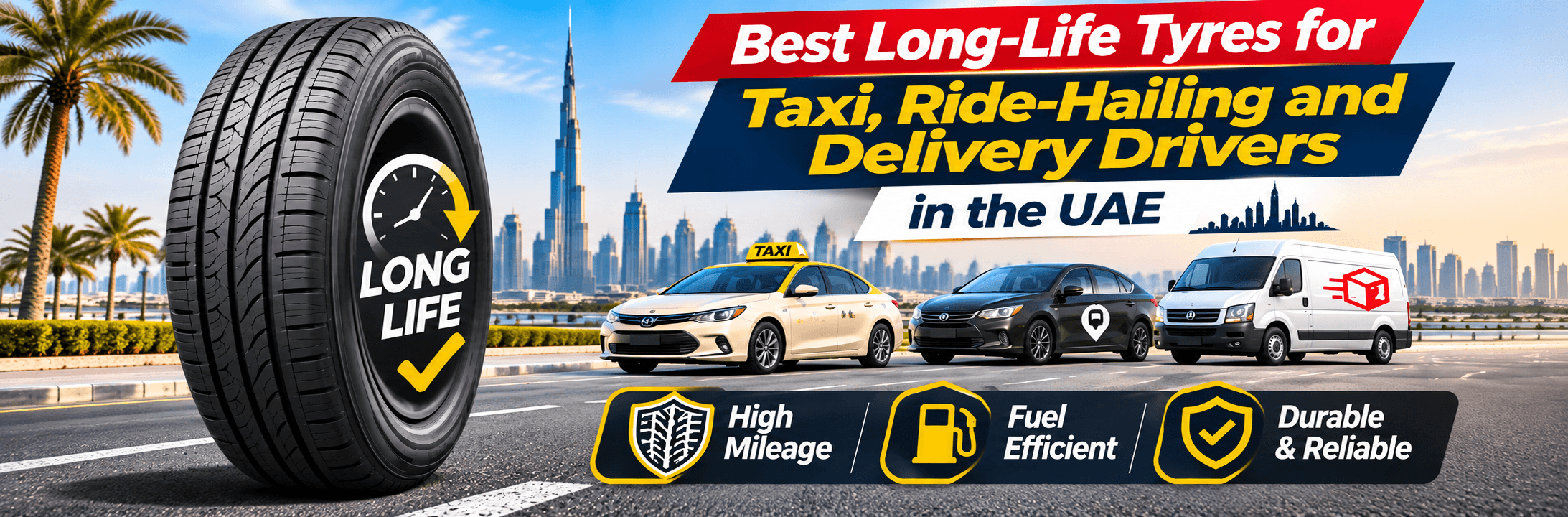
Driving a taxi, a ride-hailing car, or a delivery van in the UAE? Then you want tyres that go the distance. Look for tough tread, steady grip, good heat tolerance, and the right load rating. Touring tyres made for everyday roads are a good place to start. Your vehicle, your routes, what you carry, and how you drive all change the answer, though. Choose well, look after them, and you’ll replace them less often.
Two terms are worth knowing. Tread life is how long a car tyre stays usable before the tread wears down enough to need replacing. Rolling resistance is the drag a tyre creates as it rolls. It decides how much energy the vehicle needs to keep moving.
What Should Professional Drivers Look for in Long-Life Tyres?
You spend hours on UAE roads. That means constant braking, accelerating, and turning, often in warm weather. Your tyres take all of it. No single model suits every vehicle or route.
Compare tyres on these points:
- Tread durability: Pick models built for high mileage and even wear.
- Wet-road grip: Good traction counts in the rain, especially on busy roads at speed.
- Heat suitability: Choose a tyre that fits your vehicle and local conditions.
- Load capacity: The load index has to meet the manufacturer’s requirements for passengers, luggage, or cargo.
- Comfort and efficiency: Low noise and sensible rolling resistance make long shifts easier.
A tyre sold on durability still has to match your vehicle’s size, load index, and speed rating. Don’t sacrifice a safety spec to save money or chase a higher mileage claim.
Which Types of Tyres Suit Taxi and Delivery Drivers?
Touring tyres focus on comfort, predictable handling, and sensible tread life. If you drive mostly on paved city streets and motorways, they’re a decent starting point for taxi and ride-hailing work.
Delivery is different. Carrying heavier loads, or driving on mixed roads? Check that the tyre is approved for how your vehicle operates. Some vans and commercial vehicles need tyres with commercial ratings. Standard passenger-car tyres won’t do.
Depending on the model, performance tyres may prioritise handling and grip over tread life. And an off-road tyre is probably overkill if you stick to city streets.
Read the manufacturer’s specs and warranty terms. A famous tyre brand or chunky tread pattern doesn’t guarantee longer life.
How Do UAE Driving Conditions Affect Tyre Life?
Stop-start traffic, high daily mileage, heat, rough surfaces, and scraping kerbs all wear tyres down or damage them. Heavy loads, hard acceleration, and harsh braking make it worse.
Bridgestone names wrong inflation pressure and out-of-spec wheel alignment as common causes of early or uneven wear. Its tyre maintenance guidance shows how improper pressure changes how the tyre meets the road and speeds up wear.
For working drivers, routine checks matter. Uneven wear often points to a maintenance problem. It doesn’t always mean a bad tyre.
How Can Drivers Make Their Tyres Last Longer?
A few steady habits can extend your tyres' life without compromising safety.
- Check Tyre Pressure Regularly
Bridgestone suggests checking monthly, plus once before long trips or heavy loads. If you cover big daily distances, check more often. Measure when the tyres are cold. Use the figure your vehicle manufacturer gives you. The maximum printed on the sidewall isn’t your target.
- Inspect Tread and Sidewalls
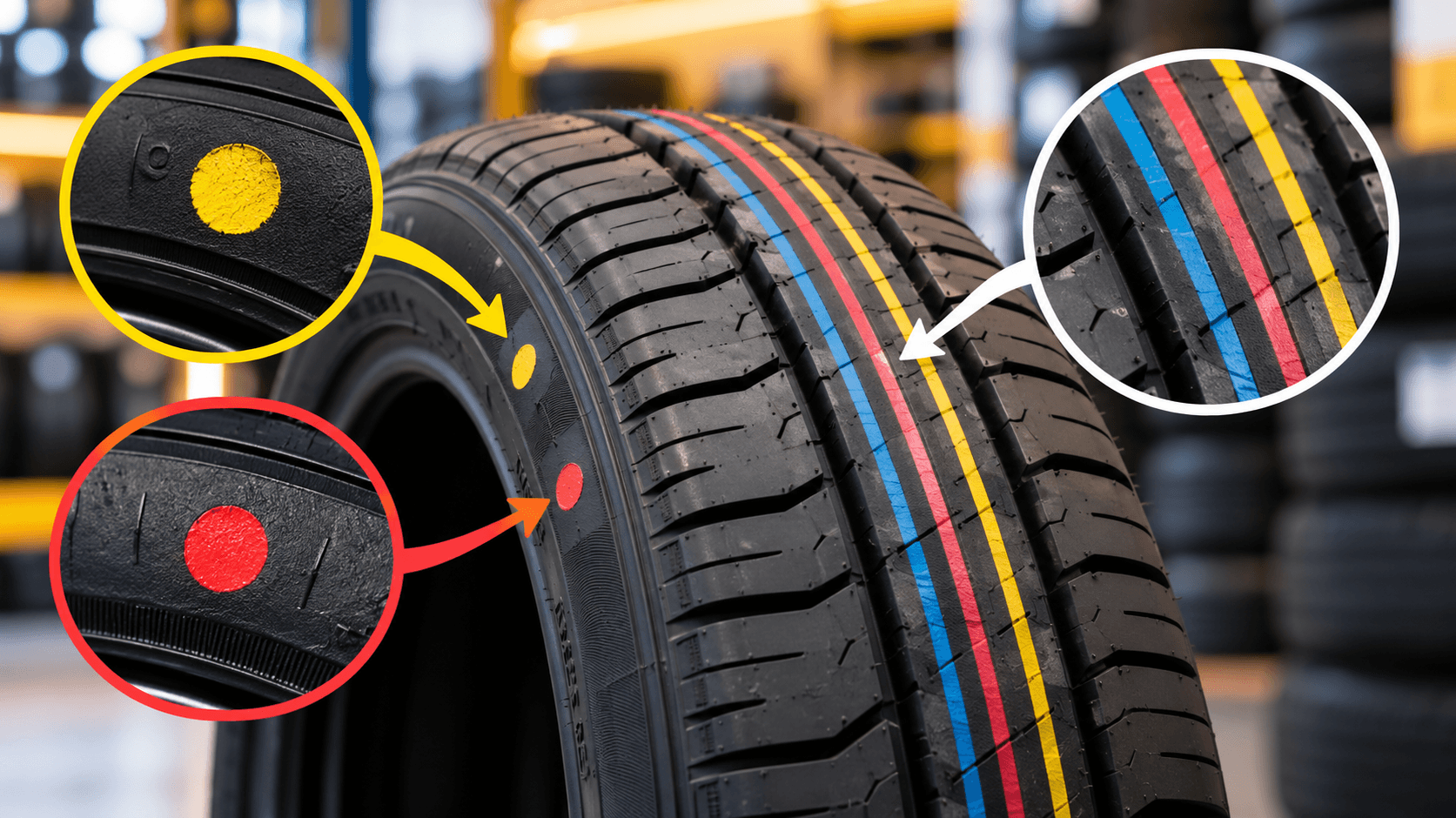
Look for uneven wear, cuts, cracks, bulges, and anything stuck in the rubber. Spot something odd? Have a tyre professional take a look. Don’t keep driving on a tyre that might be unsafe.
- Check Wheel Alignment and Balancing
Alignment is about the angles of the wheels compared with the vehicle. Balancing fixes uneven weight spread around the wheel-and-tyre unit. Both can explain vibration or strange wear. They fix different problems.
- Rotate Tyres When Appropriate
Rotation means swapping tyres between allowed wheel positions to even out wear. Stick to the vehicle maker’s interval and pattern. Allow for directional tyres, staggered sizes, and different front and rear specs.
- Drive Smoothly
Skip the harsh acceleration and sudden stops. Avoid kerbs and potholes when you can. That saves your tyres a lot of avoidable stress.
How Do You Choose the Correct Tyre Size and Load Rating?
Before you buy, confirm the approved tyre size and specs for your exact vehicle. You’ll usually find the size on the sidewall of your current tyres, in the owner’s manual, or on the vehicle placard. If your current tyres might be wrong, trust the manufacturer’s approved fitment info instead.
Check the load index and speed rating along with the dimensions. The load index is the maximum weight a tyre can carry under set conditions. The speed rating is the top speed it’s rated for under set conditions.
Taxi and delivery drivers should closely monitor load limits. Passengers, luggage, and parcels all count. Never go over the vehicle’s maximum loading capacity.
Conclusion
Long-life tyres can help taxi, ride-hailing, and delivery drivers keep running costs down. Savings depend on choosing the right spec and caring for the tyres throughout their life. Compare tread life, grip, load ratings, and fit for UAE roads before you decide.
TyresCart lets drivers compare tyres online and browse options for different vehicles and budgets. Looking for tyres Dubai drivers can order online, or tyres for car fittings? Visit TyresCart UAE to check sizes, brands, and fitting options. Read the terms of the current best tyres offer before you order.