







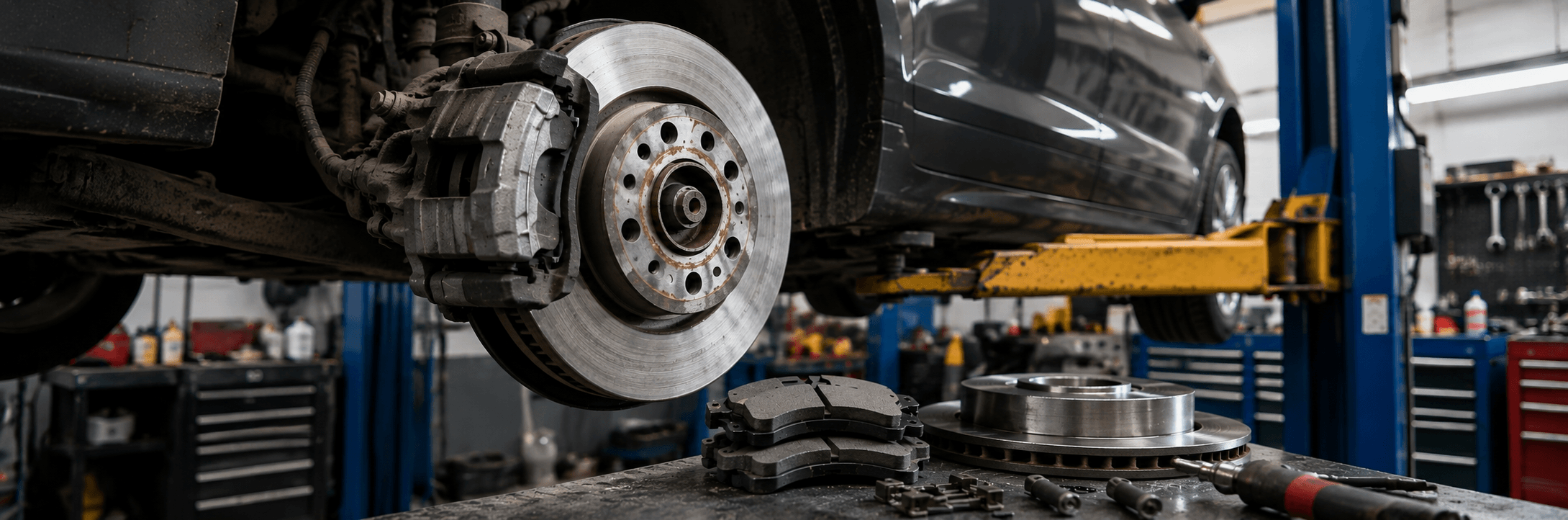
When to Replace Pads, Discs and Full Brake System?
Brake pads usually need replacement every 30000 – 60000 km and the brake discs usually last 60000 –120000 kms. Get the full brake system checked immediately if you notice a soft brake pedal, brake fluid leaks, warning lights or uneven braking. Squealing, grinding and vibrations are clear signs that your brakes need attention. You must get regular car servicing and brake inspections to keep the brake system in good working order for safety on UAE roads.
Brakes are one of the most important safety features in your vehicle. The frequent traffic, high-speed highways and sudden braking put extra strain on the braking system.
Learn about the car brake service UAE, when your brakes need attention, and what the early warning signs are to avoid costly repairs and keep your vehicle stopping safely.
What Is A Brake System?
The car's brake system is made up of several parts that work together when you press the brake pedal.
- Brake pads – These press against the brake discs to slow the wheels. They wear out with use and need regular replacement.
- Brake discs (rotors) – The pads clamp onto these discs to create friction. Over time, they wear thin or develop grooves.
- Brake calipers – These hold the brake pads in place and squeeze them against the discs when pressing the brake.
- Brake fluid – This fluid carries the force from your pedal to the brakes. Old or low fluid makes your brakes feel soft.
- Brake lines – These carry the brake fluid to each wheel. A leak here will cause a sudden loss of braking power.
- ABS (Anti-lock Braking System) – This stops your wheels from locking up during hard braking, so you stay in control of your steering.
What Signs Indicate You Need To Replace Brake Pads?
Brake pads wear down gradually with use, giving you clear warnings before they fail completely.
- Squealing noise – A high-pitched sound is one of the earliest signs of worn brake pads and means the pads are wearing thin.
- Grinding sound – A harsh, metal-on-metal sound means the pads are worn out completely and the discs may already be damaged.
- Brake warning light – Most modern cars have a sensor that turns on a dashboard light when pads are low.
- Reduced braking performance – If your car takes longer to slow down than usual then the pads may not be gripping properly anymore.
- Increased stopping distance – When your vehicle needs more distance to come to a complete stop even under normal driving conditions the brake pads could be worn.
- Thin brake pad material – If you or a technician (during an inspection) see less than 3mm of pad material left then it is time for a replacement.
When Should Brake Discs (Rotors) Be Replaced?
Brake discs last longer than pads but they still wear out over time or due to heat damage. Here is what to look out for.
- Steering wheel vibration – A shaking steering wheel while braking often points to warped discs.
- Pulsating brake pedal – If the pedal pulses under your foot then the disc surface may be uneven.
- Deep grooves – Visible scoring or grooves on the disc surface reduce braking efficiency and discs need replacement.
- Cracks – Small cracks on the disc surface are a safety risk and need immediate attention.
- Blue discoloration from overheating – A bluish tint on the disc means it has been overheated and may be weakened.
- Uneven braking – If your car pulls to one side while braking, one disc may be wearing faster than the other.
When Does The Entire Brake System Need Replacement?
Sometimes it is not just the pads or discs that need work but the whole brake system needs attention at once. Watch for these red flags -
- Soft or spongy brake pedal – This means air has entered the brake lines or the fluid needs a change.
- Brake fluid leaks – Puddles or spots under your car near the wheels are a serious warning sign.
- Car pulling to one side – This points to uneven wear across the whole brake system and not just one part.
- Brake warning lights – Multiple warning lights together mean more than one part needs checking.
- Burning smell after braking – This smell usually means the brakes are overheating and need urgent inspection.
In any of the above scenarios, you must get the brake repair Dubai immediately to avoid any critical damages. The UAE Ministry of Interior also encourages drivers to maintain roadworthy vehicles through routine maintenance and timely repairs.
What Factors Affect Brake Wear?
Brake wear depends on several factors, including your driving habits, vehicle type, and road conditions. Frequent hard braking, driving in stop-and-go traffic, carrying heavy loads, and using a heavier vehicle can all accelerate brake pad and disc wear.
The type of brake pad also affects its lifespan: organic pads wear out faster, semi-metallic pads offer better durability, while ceramic pads typically last the longest, produce less dust, and are usually more expensive.
Why Get Professional Brake Service From Tyrescart?
A professional brake service Dubai helps identify hidden brake problems during an inspection before they affect your safety or lead to expensive repairs.
- Clear advice on repairs without unnecessary replacements
- Trained technicians inspect pads, discs, fluid and lines together
- Genuine and trusted brake parts used for every repair
- Quick turnaround so you are back on the road the same day
- Transparent pricing with no hidden charges.
Conclusion
Regular brake inspections are essential for safe driving on UAE roads. Replacing worn brake pads, damaged discs, or other brake components at the right time improves stopping performance and helps prevent expensive repairs.
If you notice any warning signs, schedule a professional brake inspection with TyresCart to keep your vehicle safe and roadworthy.