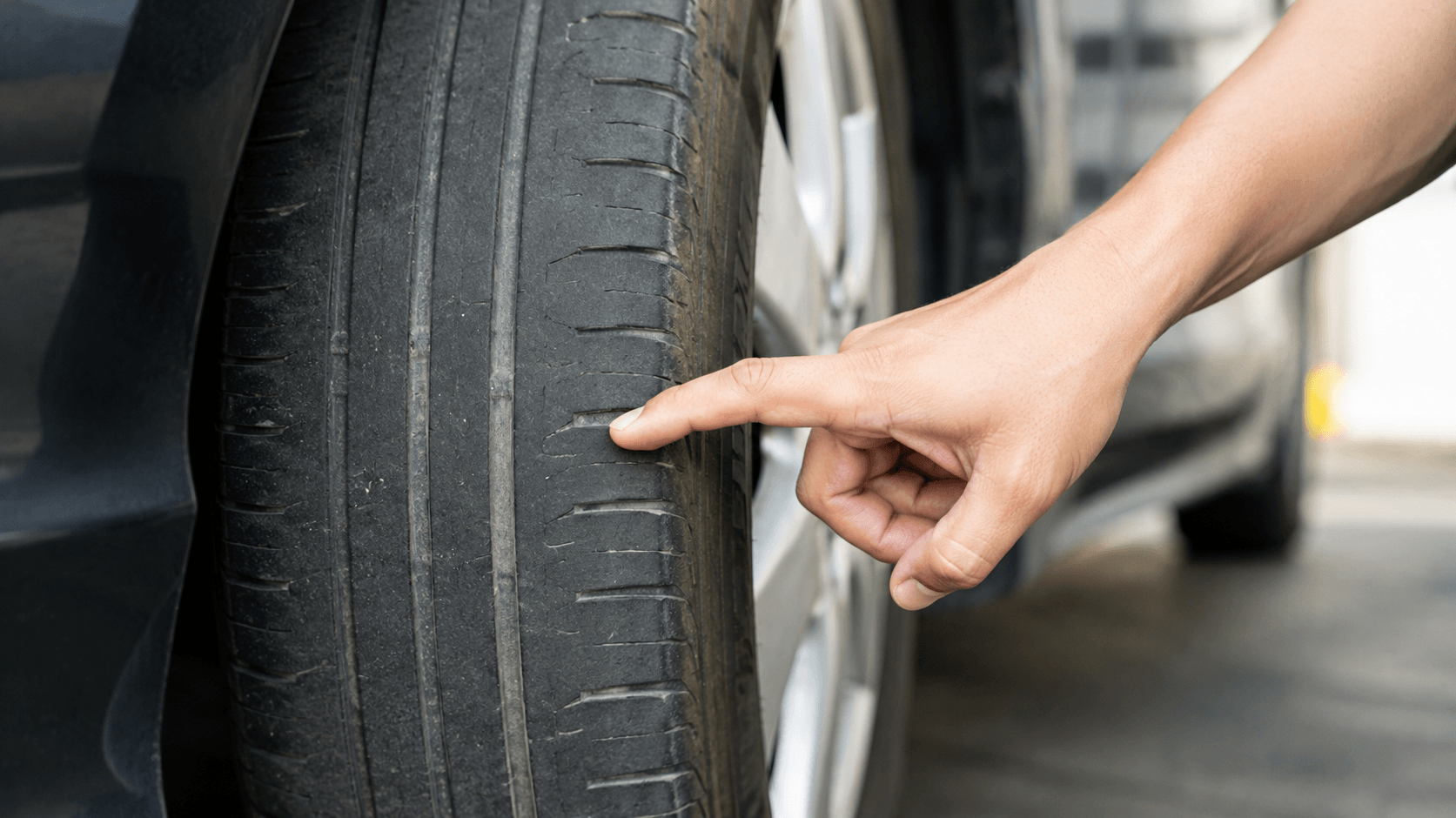

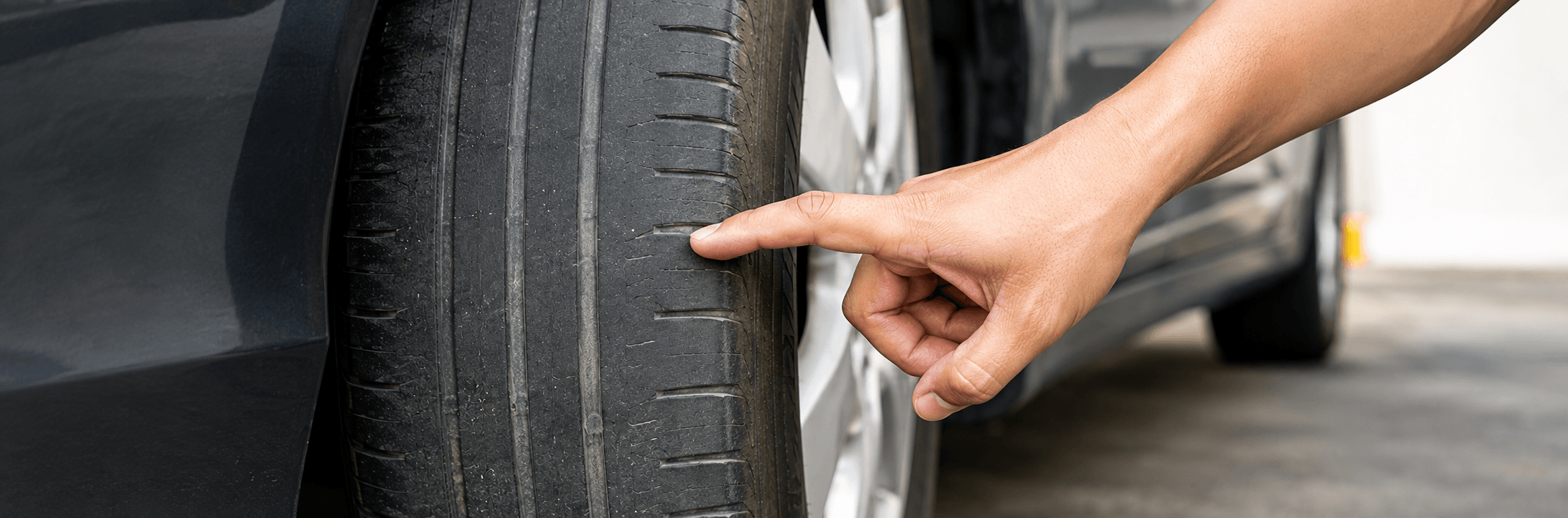
When tyre wear bars become level with the surrounding tread, the tyre has approximately 1.6 mm of tread remaining at that location. At this stage, you should not delay replacement. These raised indicators are molded into the tread grooves to provide a clear visual warning that the tyre has reached its wear limit.
UAE drivers should not wait until their car tyres look completely bald before taking action. As tread depth decreases, the tyre has less capacity to evacuate water from the contact patch. Uneven tread wear can also point to incorrect inflation, wheel-alignment problems, worn suspension components, or other mechanical issues.
Seeing the wear bars and immediately ordering another identical tyre is not always the right response. First, inspect the worn tyre and the vehicle to determine whether the tread reached its limit through normal use or because of an underlying mechanical problem.
What Are Tyre Wear Bars and Where Can You Find Them?
Tyre wear bars, also called tread-wear indicators, are small raised sections moulded into the main tread grooves.
- How Wear Bars Work
As the tyre wears, the tread surface gradually approaches the height of these indicators. Once the surrounding tread becomes level with a wear bar, approximately 1.6 mm of tread remains at that location.
You do not need to wait until the tyre looks bald. Once the tread surface is level with the indicator, the tyre has already reached the wear-bar threshold.
- How to Locate Them
Inspect the main circumferential grooves across the tyre. Many manufacturers also place TWI markings, triangles, or other symbols on the sidewall to help identify where the tread-wear indicators are positioned. Check more than one spot around the circumference, not just the one you can see.
What Should You Do When the Wear Bars Are Visible?
Visible wear bars should trigger a proper tyre inspection and replacement decision rather than another few months of driving.
- Step 1: Measure the Remaining Tread
Measure tread depth at several points around the tyre and across the inner shoulder, centre, and outer shoulder.
This helps determine whether the tyre has worn evenly. One section may already be level with the wear indicator while another still has noticeably more tread remaining.
- Step 2: Inspect All Four Tyres
Do not stop after examining only the tyre where you first noticed the wear bar. Tyres at different wheel positions can wear at different rates because of steering forces, braking, drivetrain configuration, vehicle load, inflation pressure, and alignment. Measure all four tyres before deciding whether tyre replacement is required for one tyre, a pair, or the complete set.
- Step 3: Arrange Replacement Promptly
Once the tread reaches the wear indicators, arrange replacement rather than trying to extract the last few kilometres from the tyre. The replacement must meet the vehicle's required tyre size, load index, speed rating, construction, and any specific front- or rear-axle requirements.
Why Does Low Tread Become a Problem Before a Tyre Looks Bald?
Tread is not simply a visual feature. Its grooves perform an important job whenever the road is wet.
- Reduced Water Evacuation
Tread grooves provide channels through which water can be displaced from beneath the tyre's contact patch. As tread depth decreases, there is less groove volume available to manage water.
This matters in the UAE because even infrequent rain can create standing water on sections of road, making adequate tread depth particularly important for maintaining wet-road contact.
- Greater Aquaplaning Risk
Aquaplaning occurs when a layer of water prevents the tyre from maintaining adequate contact with the road surface. Vehicle speed, water depth, tread condition, tyre pressure, and tyre design can all influence the risk.
A tyre approaching its wear bars has significantly less tread depth available to evacuate water than it had when new.
- Wet Braking Can Deteriorate
Low tread can also reduce wet-road performance. Although the tyre might be fine for commuting under normal driving conditions in the dry, it can behave differently in an emergency stop on a wet road.
What Does Uneven Wear Around the Wear Bars Tell You?
One of the most useful things about checking wear indicators is that they can reveal whether the tyre has worn normally.
- Both Shoulders Wearing Faster
Excessive wear on both shoulders can be associated with prolonged underinflation because the tyre may place greater load on the outer areas of the tread.
Compare the tyre pressure with the vehicle manufacturer's recommended cold-pressure specification and check for possible slow leaks.
- Centre Wearing Faster
Excessive centre wear can be associated with incorrect inflation or operating conditions that concentrate more load on the centre of the tread. Check the vehicle's recommended tyre pressure and confirm that the tyre specification is appropriate before assuming the tyre itself is defective.
- One Shoulder Wearing Faster
Pronounced wear on either the inner or outer shoulder can indicate a wheel alignment or suspension problem.
Replacing the worn tyre without identifying the underlying cause can result in the new tyre developing the same wear pattern.
- Feathering or Cupping
Feathering can be related to misalignment, whereas cupping may indicate issues with wheel balance, suspension, or other mechanical components.
A professional inspection should identify the underlying cause before or during replacement so the new tire doesn't develop the same problem.
Should You Replace One, Two, or All Four Tyres?
The answer depends on the vehicle and the condition of the remaining tyres.
- Replacing One Tyre
Replacing a single tyre may be appropriate when the remaining tyres have compatible tread depths, and the new tyre meets the required specification. However, a substantial difference in tread depth can affect handling and rolling characteristics.
- Replacing Tyres in Pairs
If two tyres require replacement, fitting an appropriate pair can help maintain more consistent characteristics across the axle.
When only two tyres are being replaced, many tyre manufacturers recommend fitting the tyres with greater tread depth to the rear axle to help maintain vehicle stability, particularly on wet roads.
- All-Wheel-Drive Vehicles Need Extra Attention
AWD and four-wheel-drive vehicles may have specific limits on acceptable differences in tyre circumference or tread depth.
Before replacing a single tyre on an AWD vehicle, check the manufacturer's requirements for tyre size, tread-depth variation, and rolling circumference.
Should You Wait for the Wear Bars Before Replacing Tyres?
Not necessarily. Wear bars identify a minimum tread threshold, not a promise that the tyre will deliver ideal performance until the exact moment the tread reaches them.
- Consider Driving Conditions
Drivers who regularly travel at highway speeds or encounter wet roads may choose to replace tyres before they reach the wear bars because wet-road performance can decline as tread depth decreases.
Your typical driving conditions, tyre condition, and manufacturer guidance should therefore be considered rather than treating 1.6 mm as the only point at which replacement can be justified.
- Check More Than Tread Depth
A tyre may require replacement even when sufficient tread remains if it has sidewall cracking, bulges, irreparable puncture damage, structural deterioration, or other safety-related defects.
What Should You Check When Buying Replacement Tyres?
When you buy tyres online UAE, do not let a discounted tyres offer become the main selection criterion. Check:
- Correct tyre size
- Load index
- Speed rating
- Front and rear fitment requirements
- Tyre construction
- Manufacturer and model
- Manufacturing information
- Remaining condition of the other tyres
A reliable tyre shop UAE or professional fitting provider should also check the condition of the wheels and identify alignment, balancing, or suspension issues that may have contributed to the previous wear pattern.
Conclusion
Visible wear bars are more than a reminder to start thinking about new tyres. When the surrounding tread becomes level with them, approximately 1.6 mm of tread remains at that location and tyre replacement should be arranged promptly.
Inspect all four tyres, compare their tread condition, and determine whether alignment, inflation, suspension, or another mechanical issue contributed to the wear. Replacing an irregularly worn tyre without correcting the underlying cause may simply shorten the life of the replacement.
To buy tyres online, drivers in the UAE can compare car tires on TyresCart by vehicle, size, and brand. One of the most important considerations before choosing a tyre offer is ensuring they are properly fitted and that the required car tire services support the freshly fitted tires to start their car service life with the right pressure, balance, and appropriate vehicle settings.