







Installing wider tyres can give a car a more aggressive appearance and, when fitted correctly, can also change its steering response and grip characteristics. But increasing tyre width isn't simply a cosmetic modification.
Changing tyre width, aspect ratio, or overall rolling diameter can affect fuel consumption, steering behavior, speedometer accuracy, wheel clearance, and potentially the vehicle's roadworthiness and insurance status.
If you're considering aftermarket wheels or wider car tyres in the UAE, the safest approach is to stay within the vehicle manufacturer's approved tyre sizes wherever possible. If you plan to move outside those specifications, check the technical and regulatory implications before buying the tyres.
What Does Fitting Wider Tyres Actually Change?
The first number in a metric tyre specification is the tyre width. As an example, the nominal section width of a 265/60 R18 tyre is 265 mm.
Moving to a wider tyre changes far more than how much rubber you can see beneath the car. Depending on the wheel-and-tyre combination, it can affect the contact patch, sidewall dimensions, rolling resistance, weight, clearance and overall rolling circumference.
This is why moving from a 265-width tyre to a 285-width tyre isn't automatically an upgrade. You should also consider wheel width, offset, aspect ratio, load index, speed rating, and total tire diameter.
Do Wider Tyres Increase Fuel Consumption?
They can, but width alone doesn't determine fuel consumption.
- Rolling Resistance
When a tyre rolls, it loses energy in the form of deformation. This rolling resistance is affected by tyre compound, construction, inflation pressure, tread pattern, dimensions, and vehicle load.
A wider or heavier replacement tyre, particularly one using a performance-oriented compound, may require more energy to keep the vehicle moving.
- Additional Rotating Mass
Larger aftermarket wheels combined with wider tyres can be heavier than the original wheel-and-tyre setup. Increasing unsprung and rotating mass can affect acceleration and the energy required during repeated stop-and-go driving.
- Aerodynamic Effects
Wider tyres may also increase aerodynamic drag slightly, particularly when combined with wheels that sit further outward than the factory setup.
The practical takeaway is simple: don't assume a wider aftermarket setup will deliver exactly the same fuel economy as the manufacturer's original wheel-and-tyre combination.
Can Wider Tyres Affect Your TPMS?
Yes, in some cases, but tyre width alone is rarely the reason.
In a direct tyre pressure monitoring system, a pressure sensor is placed on the wheels. When you change out the wheels and tyres and retain compatible sensors, the system can work as usual. New aftermarket wheels might need compatible TPMS sensors and may need programming or relearning, depending on the vehicle.
An indirect TPMS works differently. It uses wheel-speed data to detect changes that may indicate incorrect tyre inflation. Significant changes in tyre dimensions or rolling circumference may therefore require recalibration or other vehicle-specific procedures.
- TPMS Does Not Set the Correct Pressure
Another common mistake is treating the maximum pressure shown on the tyre sidewall as the correct operating pressure.
The maximum pressure marked on the tyre sidewall is not the same as the vehicle manufacturer's recommended operating pressure. When altering tyre specifications, seek suitable inflation advice on the approved vehicle and tyre combination.
Why Is Overall Rolling Diameter Important?
Width gets most of the attention, but overall rolling diameter can be the more important technical consideration.
In the case of the installation of a wider tyre, there is a tendency for drivers to lower the aspect ratio to ensure that the total diameter is adequately similar to that of the original specifications. If the circumference varies significantly, a variety of systems will be affected.
- Speedometer Reading
The car determines speed in part by turning the wheels. If the rolling circumference changes significantly, the distance traveled per wheel rotation changes too. This can create a difference between the speed shown on the speedometer and the vehicle's actual speed.
- ABS and Stability Systems
ABS, traction control, and electronic stability systems use wheel-speed data. Incorrect or mismatched tyre sizes can interfere with the wheel-speed relationships these systems rely on.
- All-Wheel-Drive Systems
On AWD and 4WD vehicles, differences in rolling circumference between tyres or axles can be particularly important. Tyres are to be chosen depending on the needs of that drivetrain made by the manufacturer.
Can Wider Tyres Cause Clearance Problems?
Yes. A wider tyre can create clearance problems even when it physically fits the wheel. Before ordering wider online tyres, check clearance at:
- Full steering lock
- Maximum suspension compression
- Inner suspension components
- Wheel-arch liners
- Brake and wheel components
- Front and rear wheel arches
Wheel offset matters just as much as tyre width when checking clearance. Moving the wheel outward can create clearance problems around the wheel arch, while excessive inward positioning can reduce clearance around suspension components.
That's why wheel and tyre fitment should be evaluated as a complete setup rather than as two separate components.
Can Wider Tyres Affect Car Insurance in the UAE?
Vehicle modifications should also be taken seriously from an insurance perspective.
UAE motor car insurance policies may require policyholders to disclose material vehicle modifications that change the insured risk. The precise impact of a wheel or tyre change will differ depending on the change itself, whether the vehicle is approved, and the terms of the insurer.
If your proposed wheel-and-tyre setup differs materially from the manufacturer's specification, check with your insurer before making the change rather than assuming your coverage will remain unaffected.
Keep records of the tyre and wheel specifications, purchase invoices, and any approvals required for the modification.
What About UAE Registration and Vehicle Inspection?
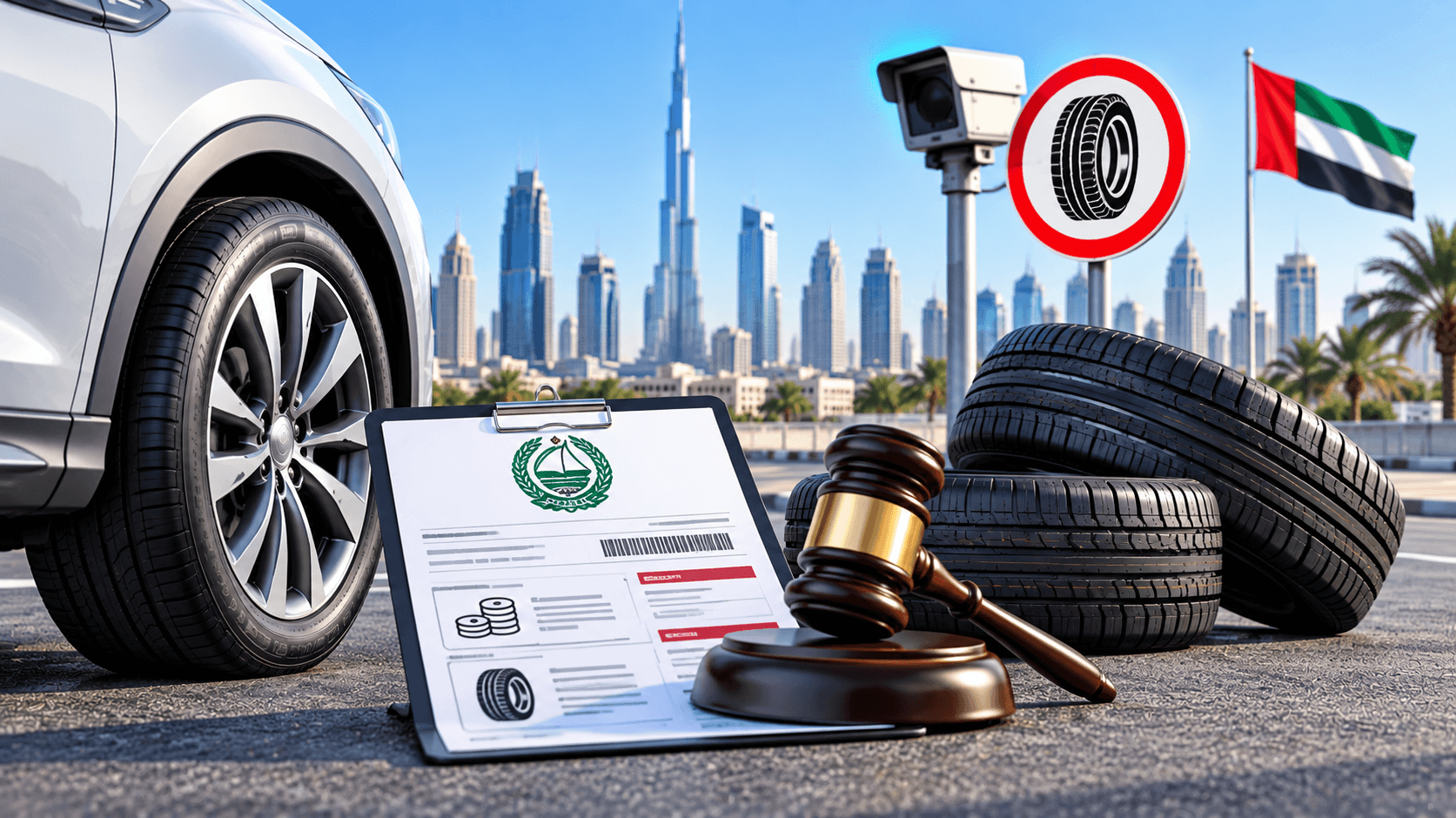
A modified wheel-and-tyre setup must also comply with applicable UAE vehicle-safety and registration requirements.
According to vehicle-registration guidance in Dubai, modified vehicles must have a valid certificate of modification issued by ESMA, and inspections are required to determine the vehicle's roadworthiness.
Precise approval criteria may depend on the vehicle and the level of modification. There is no universal rule that simply allows every vehicle to increase tyre width by a fixed number of millimeters without affecting approval or registration requirements.
In case you are leaving out a significant section of the factory wheel-and-tyre arrangement, check the present necessities with the vehicle-licensing office of the emirate in which you are operating before spending money on the new setup.
Wider vs Factory-Size Tyres
| Factor | Factory Specification | Wider Aftermarket Setup |
|---|---|---|
| Vehicle compatibility | Manufacturer validated | Must be verified |
| Fuel economy | Known baseline | May change |
| TPMS | Designed for system | May need setup |
| Clearance | Factory validated | Must be checked |
| Speedometer | Factory calibrated | Can be affected |
| Insurance | Standard specification | Disclosure may apply |
| Registration | Standard fitment | Approval may be required |
What Should You Check Before Buying Wider Tyres?
Don't change tyre dimensions simply because you've found an attractive tyres offer in Dubai.
Before purchasing, confirm:
- Approved original tyre sizes
- Diameter and wheel width
- Wheel offset
- Overall rolling diameter
- Load index
- Speed rating
- TPMS compatibility
- Body clearance and suspension
- AWD/4WD requirements
- Insurance implications
- Applicable modification approval requirements
When the larger size is an approved factory option for your specific model and wheel setup, the procedure is usually much easier than designing a completely custom fitment.
Conclusion
Wider car tyres can be a worthwhile upgrade when the complete wheel-and-tyre setup is properly matched to the vehicle. The mistake is choosing extra width purely for appearance. Overall rolling diameter, wheel offset, load capacity, TPMS compatibility, clearance, fuel consumption and applicable UAE modification requirements all need to be considered before installation.
Drivers comparing online tyres through TyresCart can explore different tyre sizes and brands based on their vehicle requirements. Before choosing a tyres offer in Dubai, confirm that the tyre is suitable for your vehicle, wheel setup and intended use. If you're moving outside the manufacturer's approved specifications, check the technical, insurance and registration implications before buying.