Tyre Pressure Guide for Different Motorcycle Types
- ١٨ مارس ٢٠٢٦ م
Correct tyre pressure is one of the most important yet frequently overlooked aspects of Motorcycles maintenance. Tyres are the only contact point between the motorcycle and the road surface, and even small deviations in inflation pressure can significantly affect grip, stability, braking efficiency, suspension performance, and tyre longevity. Whether riding a commuter motorcycle in urban traffic, touring long highway distances, or operating a high-performance sport bike, maintaining the appropriate tyre pressure ensures consistent handling and predictable safety margins.
Tyre pressure is not a one-size-fits-all measurement. It varies based on motorcycle type, tyre construction, load conditions, speed capability, riding terrain, and manufacturer specifications. Factors such as tyre load index, speed rating, and overall chassis geometry also influence recommended inflation values. Sport bikes require different inflation settings compared to cruisers or adventure motorcycles. Off-road tyres operate under entirely different pressure principles compared to highway touring tyres. Understanding these distinctions allows riders to optimize performance while preventing uneven wear, overheating, or structural damage.
This comprehensive guide explains how tyre pressure works, how it affects motorcycle dynamics, and what pressure ranges are typically recommended for different motorcycle categories. It also covers practical monitoring strategies, environmental influences, and adjustments for varying riding conditions while maintaining proper contact patch optimization and safety system compatibility.
Why Tyre Pressure Matters for Motorcycle Performance
Tyre pressure determines the size and shape of the contact patch—the area of rubber that touches the road. When pressure is correct, the contact patch distributes load evenly, ensuring balanced traction and consistent steering response. Overinflation reduces the contact area, concentrating load toward the center of the tread. Underinflation enlarges the contact patch excessively, increasing sidewall flex and generating excess heat.
These changes directly influence tyre footprint dynamics and overall tyre deformation pattern during acceleration and braking. As dynamic forces act on the motorcycle, proper pressure maintains balanced structural ply tension, especially in radial tyre construction and bias-ply construction designs. Maintaining optimal inflation ensures that the tyre casing supports intended load without excessive distortion.
Heat buildup is a critical factor in tyre performance. Motorcycles tyre are designed to operate within specific temperature ranges, and correct pressure supports effective tyre heat cycle management. Excessive internal heat from low pressure increases tyre hysteresis, which refers to energy loss within the rubber compound during flexing. This accelerates compound degradation, increases rolling resistance, and raises the risk of blowouts. On the other hand, high pressure reduces grip because less rubber contacts the road surface, particularly during cornering and braking.
Proper inflation also influences suspension dynamics and electronic rider aids. Tyres act as part of the suspension system by absorbing minor road irregularities. Incorrect pressure alters the motorcycle’s chassis balance, affecting braking load transfer and dynamic load transfer during acceleration and deceleration. Modern motorcycles equipped with ABS performance systems and traction control systems rely on predictable tyre behavior. Incorrect tyre pressure can interfere with how these systems interpret wheel speed and grip levels.
Maintaining manufacturer-recommended tyre pressure ensures predictable behavior under acceleration, deceleration, cornering forces, and electronic intervention.
Understanding Tyre Pressure Specifications
Manufacturer Recommendations
Motorcycle manufacturers provide recommended tyre pressure values in the owner’s manual or on a sticker located on the swingarm or frame. These specifications are calculated based on motorcycle weight, wheel size, chassis geometry, and intended performance characteristics. They are usually expressed in PSI (pounds per square inch) or BAR.
These values follow a cold inflation standard, meaning the pressure should be checked before riding. They also consider tyre capacity ratings such as tyre load index and speed rating, ensuring safe operation within design limits.
It is important to follow motorcycle manufacturer recommendations rather than relying solely on numbers printed on the tyre sidewall. The sidewall typically displays maximum pressure or bead seating pressure, not the recommended operating pressure. Exceeding recommended limits may compromise handling and ride comfort.
Cold vs. Hot Tyre Pressure
Tyre pressure should always be measured when tyres are cold, meaning the motorcycle has not been ridden for at least three hours or has traveled only a short distance at low speed. As tyres heat up during riding, internal air expands, increasing pressure. This natural pressure fluctuation is influenced by riding speed, road friction, and centrifugal force effects at higher rotational speeds.
A typical increase of 2–4 PSI during normal riding is common, depending on speed and ambient temperature. Monitoring cold pressure ensures accurate baseline settings and prevents unintended performance changes. Advanced motorcycles may include a tyre pressure monitoring system, which continuously displays real-time readings. However, manual verification with a calibrated gauge remains essential.
Load and Passenger Adjustments
Many motorcycles have separate pressure recommendations for solo riding and for riding with a passenger or luggage. Additional weight increases stress on the rear tyre, requiring slightly higher inflation pressure to maintain structural stability and proper tread block stability.
Ignoring load adjustments increases sidewall flex, accelerates wear, and alters handling balance. Correct inflation ensures the tyre maintains optimal compliance characteristics without exceeding load thresholds defined by the tyre load index.
Tyre Pressure Guide by Motorcycle Type
Different motorcycle categories have distinct design purposes, weight distributions, and tyre constructions. The following sections provide general pressure guidance for common motorcycle types. Always confirm exact values with the motorcycle manufacturer.
Sport Bikes
Sport bikes are engineered for aggressive acceleration, high-speed cornering, and responsive handling. They typically use high-performance radial tyre construction with reinforced belts for maximum grip and stability.
Typical cold tyre pressure ranges:
- Front: 32–36 PSI
- Rear: 34–42 PSI
Lower pressures within this range may enhance grip for spirited riding, while higher pressures improve high-speed stability and reduce centrifugal force effects at sustained velocity. Riders participating in track days often reduce tyre pressure slightly to compensate for rapid heat buildup.
Cruiser Motorcycles
Cruisers typically have heavier frames, longer wheelbases, and larger rear tyres designed for stability and comfort. Some models may use bias-ply construction.
Typical cold tyre pressure ranges:
- Front: 36–40 PSI
- Rear: 38–42 PSI
Touring Motorcycles
Touring motorcycles are built for long-distance travel, often carrying significant luggage and passenger weight.
Typical cold tyre pressure ranges:
- Front: 36–41 PSI
- Rear: 40–44 PSI
Adventure and Dual-Sport Motorcycles
On-road pressure ranges:
- Front: 32–36 PSI
- Rear: 34–40 PSI
For off-road riding, riders may reduce pressure slightly to increase traction. However, extremely low pressure increases the risk of rim damage and casing stress.
Off-Road and Motocross Bikes
Typical pressure ranges:
- Front: 12–18 PSI
- Rear: 12–18 PSI
Scooter and Commuter Motorcycles
Typical cold tyre pressure ranges:
- Front: 26–32 PSI
- Rear: 28–36 PSI
Effects of Incorrect Tyre Pressure
Underinflation Risks
Underinflated tyres generate excessive heat due to increased sidewall flex and rising tyre hysteresis. This accelerates tread wear, reduces fuel efficiency, and may cause internal separation.
Overinflation Risks
Overinflated tyres reduce the contact patch and limit traction. Reduced compliance affects ride comfort and braking grip.
Seasonal and Environmental Considerations
Ambient temperature affects tyre pressure significantly. For every 10°C change, pressure may change by approximately 1–2 PSI. Altitude changes also influence internal readings due to reduced atmospheric pressure at higher elevations.
Best Practices for Maintaining Correct Tyre Pressure
- Check tyre pressure weekly and before long rides.
- Measure pressure when tyres are cold.
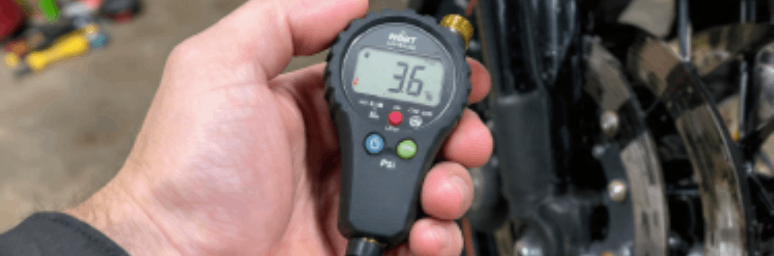
- Use a reliable pressure gauge.
- Ensure proper valve stem integrity.
- Adjust pressure based on load and riding style.
- Inspect for uneven wear.
- Monitor seasonal temperature changes.
- Verify readings even with TPMS.
FAQs
The correct tyre pressure is specified by the motorcycle manufacturer and listed in the owner’s manual or on the frame label. It reflects weight distribution, intended speed capability, and load ratings.
No. The sidewall indicates maximum or bead seating pressure, not recommended operating pressure.
At least once per week and before long rides. Smaller tyres may require more frequent checks due to higher sensitivity to pressure changes.
Slight reduction may increase traction in controlled conditions such as off-road riding. However, excessive reduction increases heat buildup and structural stress.
Yes. Underinflated tyres increase rolling resistance, reduce efficiency, and accelerate tread wear. Maintaining proper inflation improves mileage and overall performance.