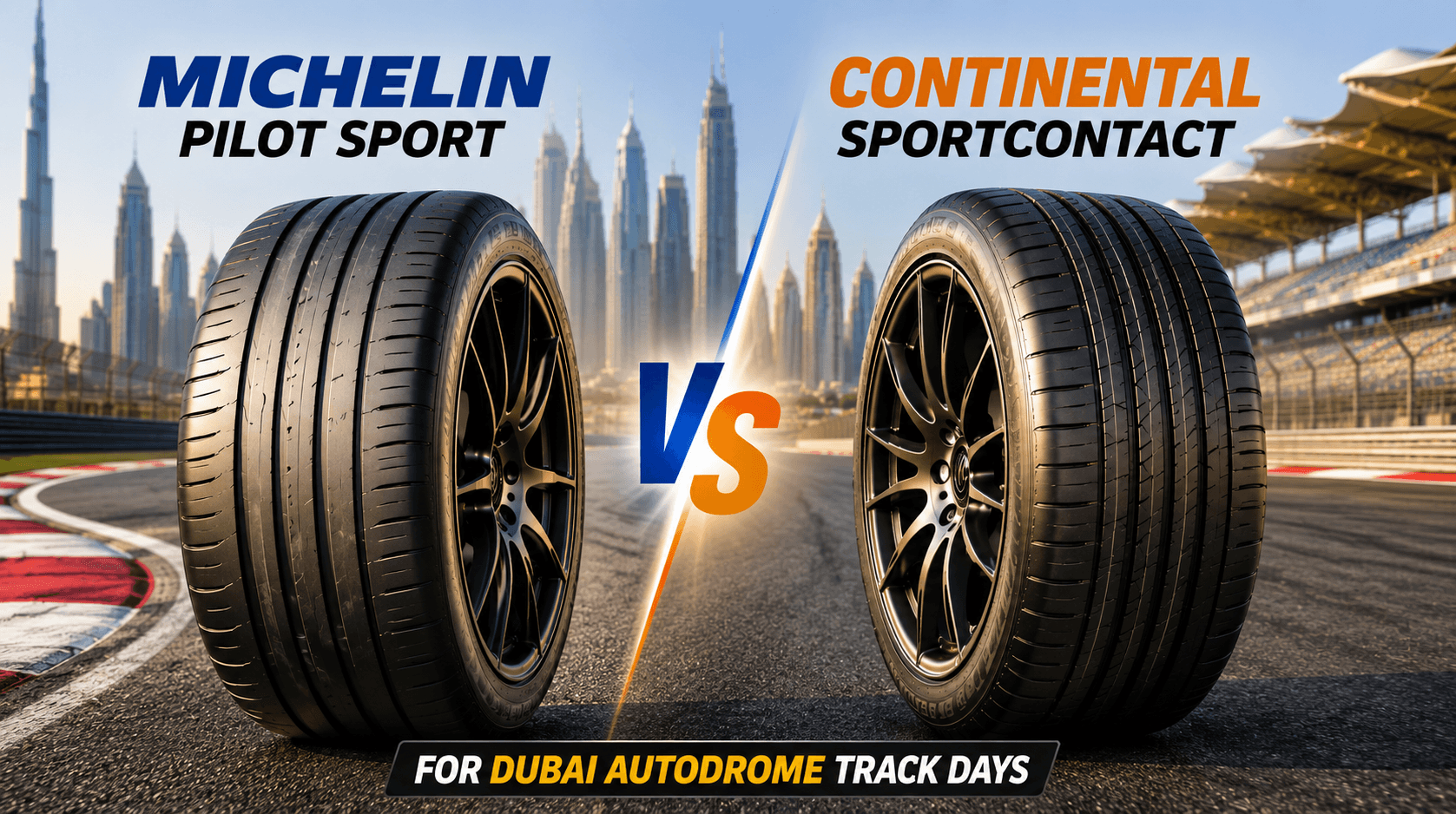

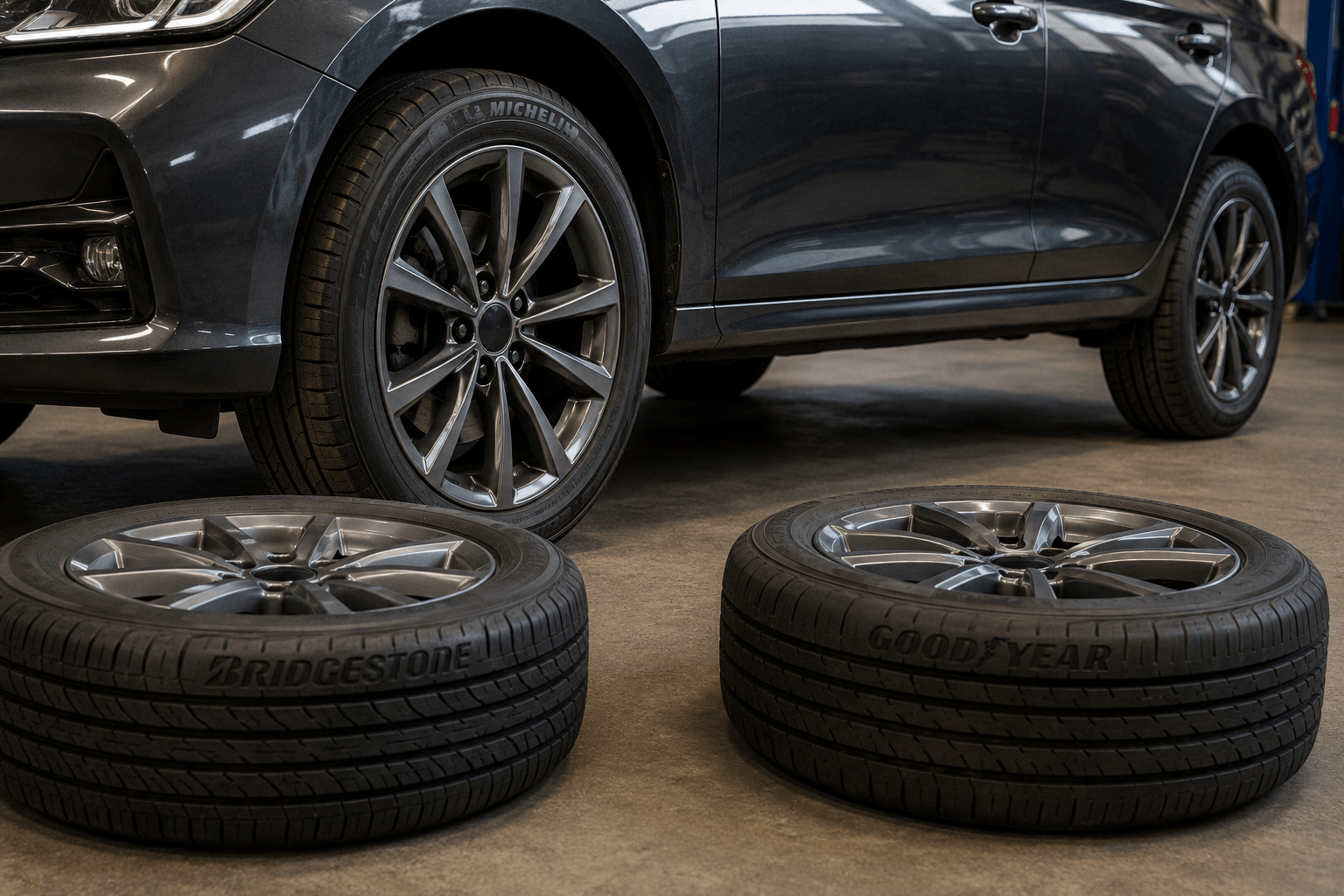
Several motorists will not replace all the tyres on a vehicle simultaneously; they will replace each tyre individually. This normally occurs due to accidental tyre damage, imbalanced wear, or cost considerations. And this is where a typical question arises: is it possible to combine tyre brands on the same vehicle?
Yes, technically, it is possible. However, it is a matter of safety and recommendation, depending on the differences in performance, tread design, grip level, and driving behavior of the tyres. The thing is, tyres are not just round rubber components. They have a direct influence on braking and cornering, stability, and road control.
Tyre consistency is even more important in UAE conditions, as they require high temperatures, high speeds on highways, and long distances. This is why it is important to learn about the safety of mixing tyre brands before using different tyre types on the same car.
Why Drivers End Up Mixing Tyre Brands
Most drivers do not deliberately use mixed tyre setups. It normally occurs as a result of replacement cases, in which one or two tyres wear out before the rest.
Common reasons include:
- Emergency tyre replacement
- Budget limitations
- Different tyre availability
- Uneven tyre wear
This is why the variation in tyre brands within car arrangements is more prevalent than many drivers are aware of.
Can You Mix Tyre Brands?
In some cases, it is possible to mix tyre brands. However, safe mixing requires compatibility in terms of tyre size, speed rating, load index and performance features.
Whether it is a brand name or not is the lesser of the evils.
The real issue is:
- Different tread behaviour
- Different grip levels
- Different sidewall response
- Different heat performance
That’s what affects stability and handling. That is the reason why it is safe to mix tyres UAE is so dependent on the way the tyres are compatible in their functioning, not only in their appearance.
Why Mixing Tyres Can Affect Driving Performance
Tyres act as a whole system of road contact. When tyres act differently, the vehicle's balance will not remain the same.
- Different Grip Levels Change Stability : When one tyre has more grip than the other, braking and cornering responses are uneven.
- Different Tread Patterns Affect Water Dispersion : Tyres with different tread patterns respond differently to wet or dusty roads.
- Uneven Sidewall Flex Changes Handling : Various tyre constructions affect steering responsiveness and road feel consistency.
- Different Wear Rates Create Imbalance : Some tyres wear more quickly than others, which affects driving stability in the long run.
These are significant issues associated with mixing the tyre brands' safety.
Mixing Front and Rear Tyres: Why It Matters
Most drivers believe that tyre position is inconsequential, provided the tyres are the same size. However, front and rear tyre behaviour influences handling balance differently.
- Front Tyres Control Steering Response : The precision of steering and the feel of braking greatly depend on the front tyres.
- Rear Tyres have effect on stability : Rear tyres ensure that the vehicle is balanced when turning corners and at high speeds.
- Lack of Grip Results in an Imbalanced Handling : There are varying front and rear grip levels, which may influence emergency control behavior.
- Uneven Grip Creates Handling Imbalance : Mixed tyre behaviour is also more pronounced in highway driving.
When Mixing Tyre Brands Is Usually Acceptable
There are situations where mixing tyres becomes practical and relatively safe when managed properly.
- Temporary Emergency Replacement : In the event of sudden damage to one of the tyres, it may be necessary to temporarily mix the brands.
- Matching Tyre Specifications : Mixing is safer when the tyre size, speed rating, and performance category are similar.
- Low-Performance Daily Driving : Driving in the city at moderate speeds places less performance pressure than driving on the highway at aggressive speeds.
- Situations of partial Tyre Replacement : If there are two tyres in good condition, it may be reasonable to replace only two.
When Mixing Tyres Becomes Riskier
Certain tyre setups lead to greater performance disparities and raise safety concerns.
- Mixing Touring and Performance Tyres : Varied grip and handling behavior bring out varied responses to the road.
- Different Tyre Sizes : Mis-matched tyre sizing influences handling, braking, and drivetrain balance.
- Blending Worn and New Tyres : Big tread-depth variations decrease traction uniformity.
- High-Speed Highway Driving : The faster the driving speed, the more the tyre imbalance is noticed.
Is it safe to mix tyres? UAE is more critical in this case since roads in the UAE usually entail highway speeds.
Mixing Tyres vs Full Matching Set
The safest tyre setup is always a fully matched set because all tyres behave consistently under braking, cornering, and heat exposure.
| Factor | Mixed Tyres | Matching Tyres |
|---|---|---|
| Handling Consistency | Lower | Better |
| Road Stability | Variable | Stable |
| Braking Balance | Less Predictable | Better |
| Tyre Wear Balance | Uneven | More Consistent |
How to Mix Tyres More Safely
Should a mixture of tyres be unavoidable, then the aim should be to minimize the performance difference as much as possible. It is not merely about having different brand tyres on the car, but rather about the combination of tyres, which act differently during braking, cornering, heat, and highway driving. The mixing of tyres in a safer manner requires balance in the vehicle.
- Keep Matching Tyres on the Same Axle
The front two tyres or the back two tyres must always be of the same brand, tread pattern and performance category. Uneven mixing of tyres on the same axle will result in handling and braking instability.
- Match Tyre Size and Specifications Properly
Although the brands may vary, tyre size, speed rating and load index must be the same. Variations in specifications influence steering response, grip performance, and overall road stability during driving.
- Avoid Mixing Touring and Performance Tyres
Touring and performance tyres are designed to achieve different driving behaviors. Their combination results in uneven grip, varying cornering reaction, and unreliable handling at higher velocities, particularly during emergency braking.
- Maintain Similar Tread Depth
The presence of a big gap between new and worn tyres alters the traction balance and braking efficiency. The tread depth is similar to ensure more stable road contact across all four tyres.
- Install Better Tyres at the Rear
The tyres with better tread and grip would be set on the rear in most cases, since rear stability is significant in emergency handling and control on wet roads.
- Prioritize Professional Tyre Inspection
Tyre experts can detect compatibility issues that drivers might not notice. A correct check will assist in deciding whether the tyre combination is safe to be used on the UAE roads and highways.
- Avoid Aggressive Driving with Mixed Tyres
Tyre combinations should be driven with more caution, as the response and grip consistency might not be the same in a mixed tyre setup as in a fully balanced tyre setup.
Is It Better to Replace All Four Tyres Together?
Yes, in most cases. An entire matching set forms:
- Better handling balance
- Consistent grip
- Predictable braking
- Better consistency of tyre life.
Although partial replacement can be cost-effective in the short term, an appropriately paired solution tends to enhance long-term driving assurance and steadiness.
Conclusion
Then, is it possible to combine tyre brands? Yes, technically, provided that the specifications of tyres, the type of performance, and the driving style do not contradict each other. It matters not only what the brand name is, but also how various tyres perform under braking, cornering, heat, and at highway speeds. In the UAE climate, where cars operate in high temperatures and at high speeds, tyre consistency is a significantly greater factor in safety and handling stability.
To drivers who are worried about the safety of mixing tyre brands, swapping the right ones, matching them with compatible ones, and ensuring that the tyres are properly installed is more important than merely choosing any replacement available. TyresCart will assist UAE drivers in comparing tyre brands, choosing compatible ones, and providing professional tyre replacement and fitting services to ensure safer, more balanced driving performance.