







Motorcycle tyre pressure directly influences safety, handling precision, braking performance, fuel efficiency, and tyre lifespan. Unlike many other maintenance tasks that can be performed at extended intervals, tyre pressure requires consistent monitoring because even small variations can significantly alter how a motorcycle behaves on the road. Air pressure inside the tyre supports the motorcycle’s weight, stabilizes the contact patch, and maintains proper carcass shape under acceleration, braking, and cornering forces.
Motorcycles tyre naturally lose air over time due to permeation through the rubber compound, temperature fluctuations, valve stem leakage, or minor bead imperfections. These gradual losses often go unnoticed until performance begins to degrade. Because motorcycles rely on only two contact points with the road, maintaining optimal tyre pressure is not merely a comfort issue but a primary safety consideration. Understanding how often to check motorcycle tyre pressure, and why frequency matters, helps riders prevent uneven wear, overheating, and compromised handling.
This comprehensive guide explains the recommended checking intervals, environmental factors affecting pressure, riding conditions that require more frequent monitoring, and best practices for maintaining consistent inflation levels.
Why Motorcycle Tyre Pressure Requires Regular Monitoring
Motorcyclestyres function as structural and dynamic components. Proper inflation ensures that the tyre maintains its designed profile geometry, allowing the tread pattern to distribute load evenly across the contact patch. When pressure drops below recommended levels, excessive sidewall flex increases internal heat generation. This heat accelerates rubber degradation and reduces structural integrity over time. Conversely, overinflation reduces the contact patch size, decreasing traction and increasing center tread wear.
Unlike cars, motorcycles are more sensitive to minor pressure deviations because they depend on balance and lean dynamics for stability. A difference of just 2–3 PSI can noticeably affect steering feedback and braking response. Riders may experience vague corner entry, instability during acceleration, or increased stopping distances if pressure is incorrect. These changes may occur gradually, making them difficult to detect without regular measurement.
Routine tyre pressure checks serve as a preventive maintenance measure. Consistent monitoring reduces the risk of blowouts, uneven wear patterns, and unexpected handling issues during daily commuting or long-distance touring.
How Often Should You Check Motorcycle Tyre Pressure: The Essential Guide to Safety and Performance
Weekly Checks for Regular Riders
For riders who use their motorcycles several times per week, tyre pressure should be checked at least once weekly. This interval ensures that natural air loss, which can range from 1–2 PSI per month under normal conditions, does not accumulate to unsafe levels. Weekly checks also help identify slow leaks caused by small punctures, valve stem deterioration, or bead seating issues.
Even if the motorcycle feels stable, relying solely on handling feedback is insufficient. Tyre pressure can drop gradually without obvious symptoms until performance is already compromised. Establishing a weekly routine creates consistency and reduces the likelihood of extended underinflation.
Before Long Rides or Highway Travel
Tyre pressure should always be checked before long-distance travel, especially highway riding. Sustained high speeds generate heat and increase internal air expansion. Starting a long ride with underinflated tyres significantly increases the risk of overheating and accelerated tread wear.
Touring riders, adventure motorcyclists, and commuters planning extended highway use should verify cold tyre pressure before departure. Ensuring proper inflation improves fuel efficiency, stability under load, and braking reliability during prolonged operation.
After Significant Temperature Changes
Ambient temperature has a direct impact on tyre pressure. As a general guideline, pressure changes by approximately 1 PSI for every 10°C (18°F) fluctuation in temperature. Cold weather reduces pressure, while warm weather increases it. Seasonal transitions often lead to unnoticed pressure shifts that require correction.
Riders should check tyre pressure whenever there is a noticeable change in climate conditions. This is particularly important during winter mornings or in regions with significant day-to-night temperature differences. Maintaining stable pressure across environmental variations preserves consistent handling performance.
After Carrying Additional Load
Motorcycle manufacturers provide recommended tyre pressure values for solo riding and for riding with a passenger or luggage. Carrying extra weight increases stress on the rear tyre and may require a higher inflation setting to maintain structural integrity. Riders should check and adjust pressure before transporting a passenger or heavy cargo.
After removing additional load, it is equally important to reset tyre pressure to standard solo riding specifications. Operating at elevated pressure without load can reduce ride comfort and traction.
Cold vs. Hot Tyre Pressure: When to Measure
Tyre pressure should always be measured when tyres are cold. A cold tyre means the motorcycle has been stationary for at least three hours or ridden only a short distance at low speed. Riding generates friction and internal heat, causing air expansion and temporarily increasing pressure.
Measuring hot tyre pressure produces inflated readings that do not reflect baseline conditions. Adjusting pressure while tyres are warm may lead to underinflation once they cool down. For accurate and consistent monitoring, riders should check pressure in the morning before riding or after allowing adequate cooling time.
If pressure must be checked during a ride, it should be compared against known hot pressure benchmarks established during previous checks rather than manufacturer cold specifications.
Factors That Increase the Need for Frequent Checks
Aggressive Riding Style
Sport riders who frequently accelerate hard, brake aggressively, or lean aggressively during cornering generate higher tyre temperatures. Increased heat leads to more rapid air expansion and contraction cycles, potentially affecting pressure stability. Riders who engage in spirited riding should monitor tyre pressure more frequently than casual commuters.
Frequent heat cycles also accelerate compound wear and may influence pressure retention over time. Regular checks ensure consistent performance and prevent irregular tread degradation.
Off-Road or Mixed Terrain Use
Adventure and dual-sport motorcycles often operate across varied surfaces, including pavement, gravel, and dirt. Riders sometimes lower tyre pressure to improve traction off-road. However, failure to reinflate tyres to highway specifications before returning to pavement can result in excessive heat buildup and structural stress.
For mixed-terrain riders, tyre pressure should be checked before and after off-road sessions. Consistency in pressure settings helps maintain stability and prolong tyre life.
Older Tyres or Valve Components
As tyres age, the rubber compound gradually becomes more porous, increasing air permeation. Valve stems and valve cores may also deteriorate over time, allowing minor leaks. Older tyres may require more frequent pressure monitoring to ensure safety.
Replacing valve stems during tyre changes and inspecting valve caps for tightness helps reduce air loss. Riders operating motorcycles with ageing tyres should check pressure more often to detect gradual leakage early.
Consequences of Neglecting Tyre Pressure Checks
Underinflation Risks
Underinflated Motorcycles tyre generate excessive heat due to increased sidewall flex. This heat buildup accelerates tread wear and can weaken the tyre carcass. Over time, underinflation may cause shoulder wear, reduced fuel efficiency, and compromised braking performance.
Handling also suffers. Steering response becomes slower, and the motorcycle may feel unstable during corner entry. In extreme cases, severe underinflation increases the risk of tyre failure or blowouts at highway speeds.
Overinflation Risks
Overinflated tyres reduce the size of the contact patch, decreasing traction during braking and cornering. The ride becomes firmer, transmitting more vibration through the chassis. Center tread wear accelerates, shortening tyre lifespan.
Excess pressure may also limit the tyre’s ability to conform to uneven road surfaces, reducing grip in wet or rough conditions. While overinflation is generally less catastrophic than severe underinflation, it still compromises overall performance and safety.
Best Practices for Checking Motorcycle Tyre Pressure
Use a Reliable Pressure Gauge
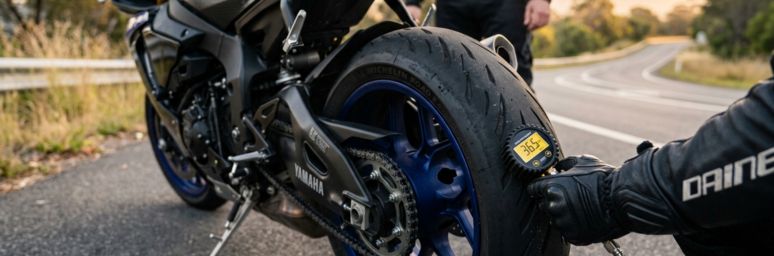
Invest in a high-quality digital or calibrated analogue tyre pressure gauge. Inaccurate gauges can lead to incorrect adjustments. Portable gauges are convenient for home use, while compact models fit easily in a riding toolkit for travel.
Follow Manufacturer Specifications
Always reference the motorcycle manufacturer’s recommended cold pressure values, typically found in the owner’s manual or on a frame sticker. Do not rely solely on the maximum pressure printed on the tyre sidewall, as this indicates structural limits rather than optimal operating pressure.
Inspect Tyres During Pressure Checks
Pressure checks provide an opportunity to inspect tread depth, look for punctures, and identify uneven wear patterns. Early detection of damage prevents sudden failures and reduces long-term maintenance costs.
Check Valve Condition
Ensure valve stems are secure and free from cracks. Replace worn valve cores and use valve caps to protect against dust and debris. Minor valve leaks are a common cause of gradual air loss.
Seasonal and Storage Considerations
Motorcycles stored for extended periods require special attention. Tyres gradually lose air even when stationary. Riders should check pressure monthly during storage and reinflate as needed to prevent flat spotting or sidewall stress.
During colder months, pressure may drop significantly overnight. Riders who operate year-round should develop a habit of quick morning pressure checks before commuting.
Creating a Routine Tyre Pressure Schedule
Consistency is the most effective strategy for tyre pressure management Riders can integrate pressure checks into weekly maintenance routines, such as chain lubrication or general cleaning. Setting calendar reminders or pairing pressure checks with fuel refills can also reinforce consistency.
For high-mileage riders, weekly checks may be supplemented by quick visual inspections before each ride. Establishing a structured schedule reduces the likelihood of oversight and promotes long-term safety.